



Most people who visit Phu Quoc today see one version of the island. There’s another one – harder to find, not going to be here forever. A fish sauce barrel house by the river. A pepper farm run by the same family for fifty years. A fishing village, the tour boats pass without stopping. This is a guide to that version.
MAIN CONTENTS
A Pepper Farm With 50-Year Roots
Vietnam is one of the world’s leading pepper producers, and Phu Quoc’s red basalt soil produces a variety with particular intensity.
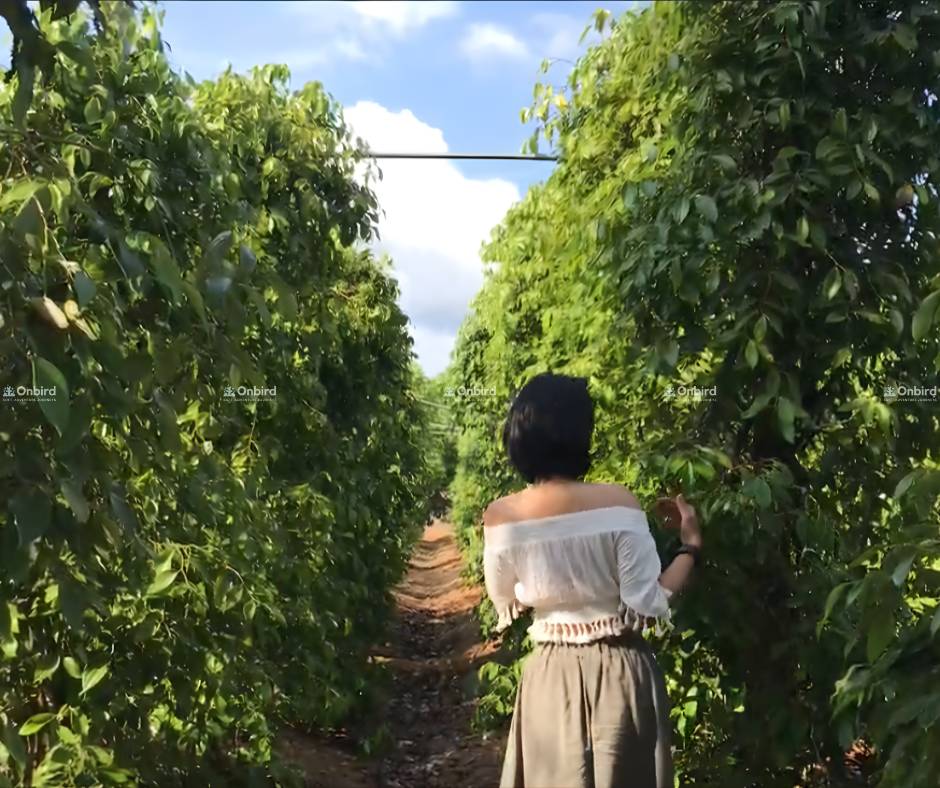
Hai Duong Pepper Farm in Cua Can is one of the few remaining family-run farms still cultivating in the traditional way. The garden traces back more than half a century, to when the family first broke ground on this stretch of red basalt soil. A son built the current garden. Now the third generation is carrying it forward.
The farm produces pink, black, and white peppercorns – all from the same vines, processed differently. Visits are informal and unhurried. A family member who actually grows the crop walks you through the rows, explains the drying methods, and ends with a tasting.
There’s no online shop, no delivery. The only way to buy is to show up.
This is the kind of detail that turns a Phu Quoc trip into something you actually remember.
Follow the Fishermen’s Faith
Phu Quoc’s fishing community has always lived close to uncertainty.
The shrines and temples scattered across the island aren’t decorative. They mark the places where generations of fishermen made their quiet agreements with the sea – asking for safe passage, giving thanks when they received it.
Dinh Cau, perched on a rocky outcrop at the mouth of Duong Dong River, is the most recognized. The Dinh Ba Thuy Long Thanh Mau ceremony on the first full moon of the lunar year blends Vietnamese, Khmer, and Cham traditions – a reminder of how many cultures built this island together.

Chua Ho Quoc, a Zen monastery on the east coast, offers something quieter still: forest behind, open sea ahead.
But the temples most worth seeking out are the ones tourists rarely find.
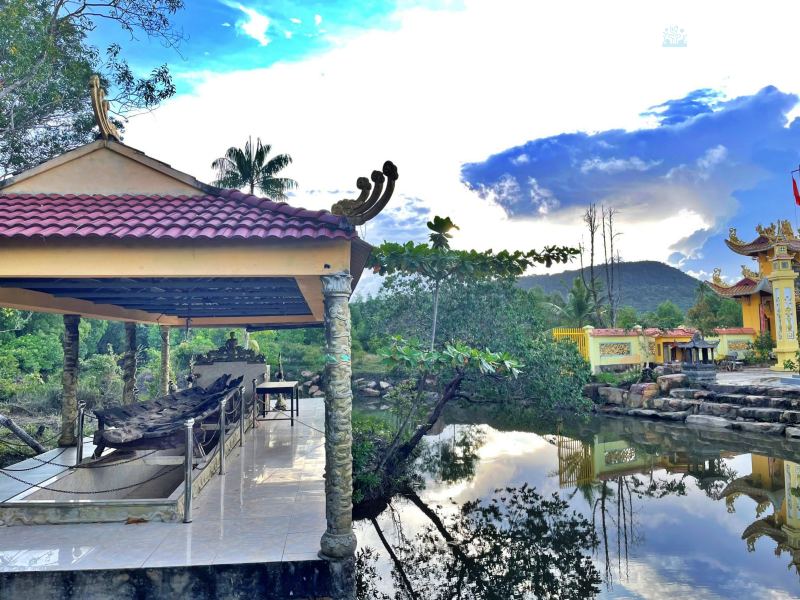
Cua Can fishing village, in the north of the island, still looks the way Phu Quoc once did. Wooden boats are tied up along the river. Nets are drying in the sun. A pace that hasn’t been rerouted for visitors.
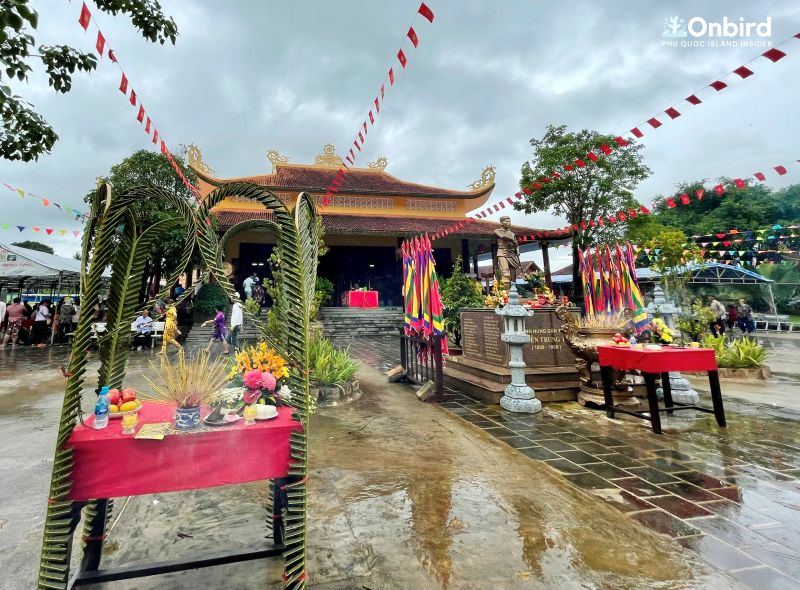
The Nguyen Trung Truc Temple here honors the resistance hero who used a wooden vessel to retreat and hold ground against French colonial forces in September 1867. The boat’s construction – said to have been assembled without metal nails – remains a quiet mystery that local people still talk about.
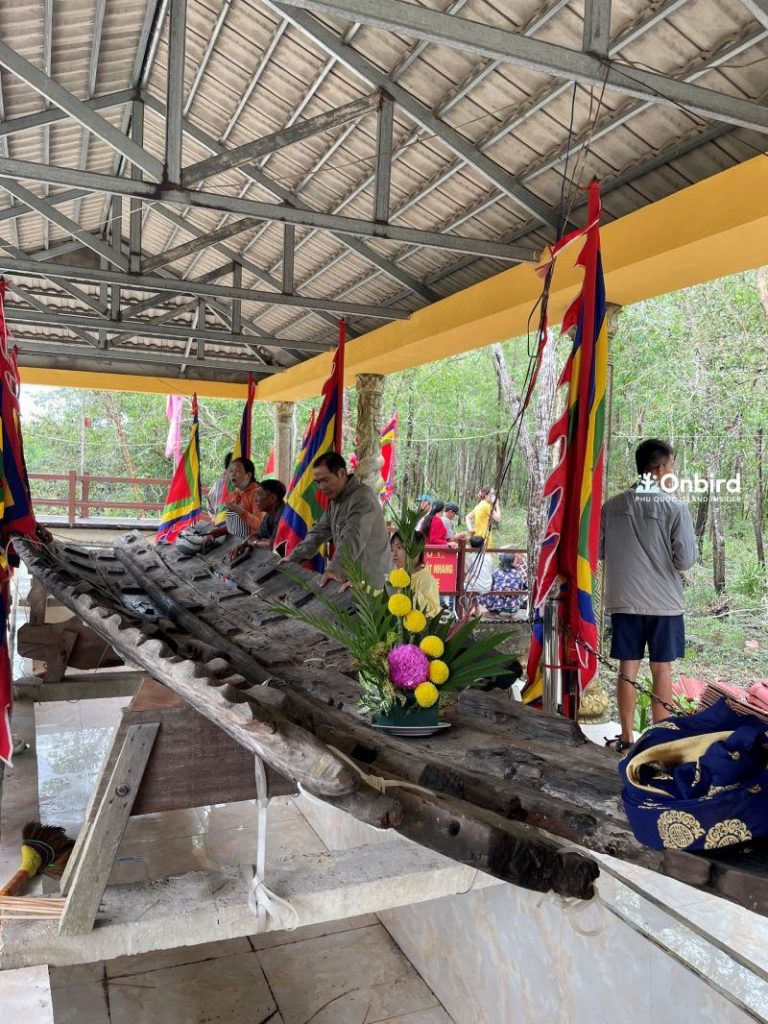
Every year, from the 26th to the 28th of the eighth lunar month, thousands of people travel from across Kien Giang and the Mekong Delta to commemorate him. Not as a formal ticketed event, but as a community gathering. Food, shelter, and basic medical care are provided free to everyone who comes, funded entirely by voluntary contributions from ordinary people. It is one of the most genuinely communal festivals in southern Vietnam, and most tourists never know it exists.
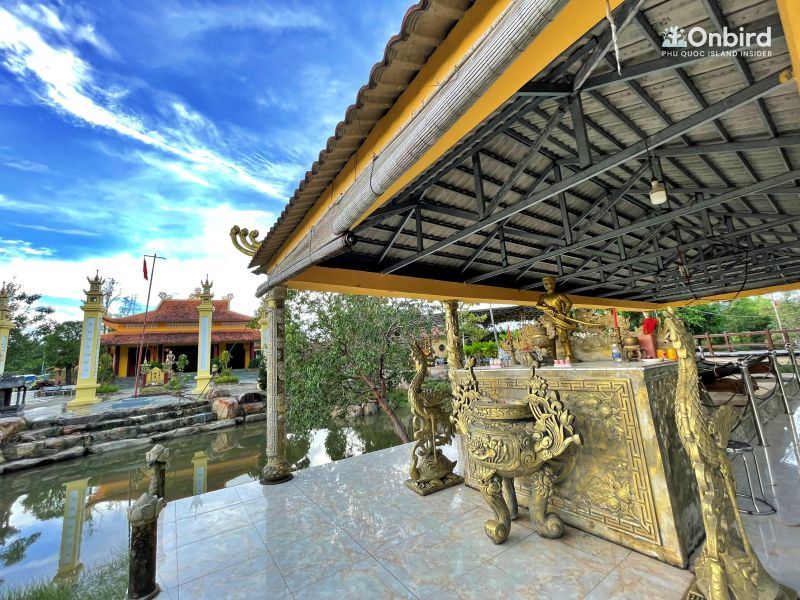
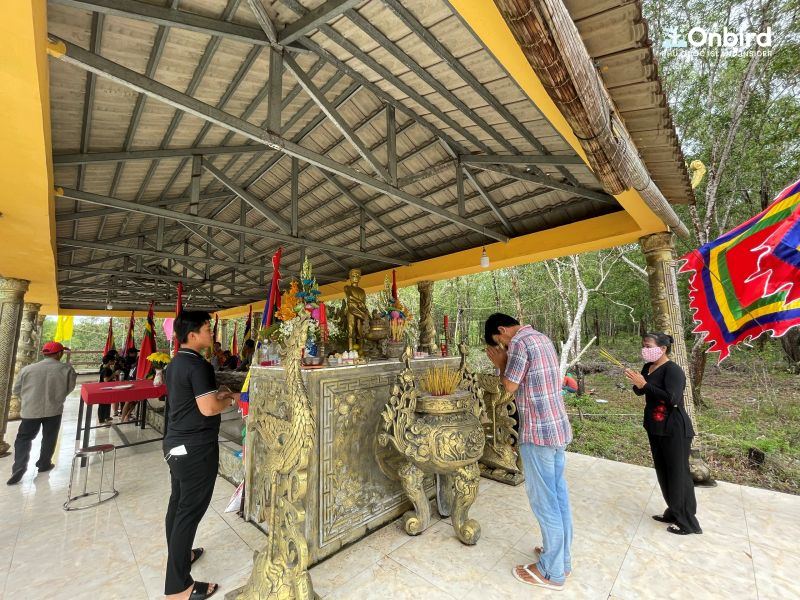
Onbird’s Coral Jungle North Phu Quoc tour runs by speedboat along the Cua Can coastline before heading out to untouched reef systems in the north. The north is a different island. Quieter water. No crowds. The speedboat passes Cua Can before the reef — and that contrast alone is worth the trip.
→ Explore the Coral Jungle & Cua Can route
The Story Inside a Fish Sauce Barrel
Phu Quoc fish sauce – nước mắm Phú Quốc – is one of Vietnam’s most internationally recognized products. The Protected Designation of Origin was established in 2001. But the process behind it is older than any certification.
The traditional barrel houses, called “nhà thùng”, still operate in Duong Dong town. Anchovy catches from the surrounding sea are layered with salt inside large wooden barrels – sometimes up to 12 months of fermentation before the sauce is drawn off and graded.
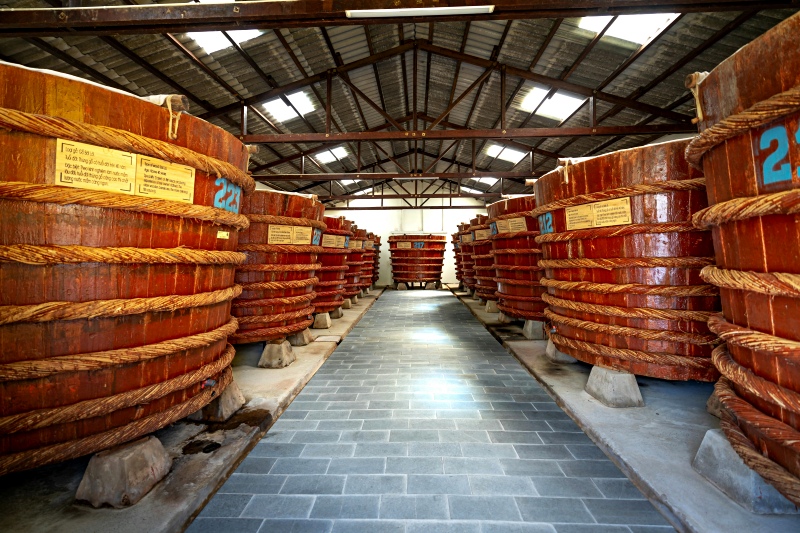
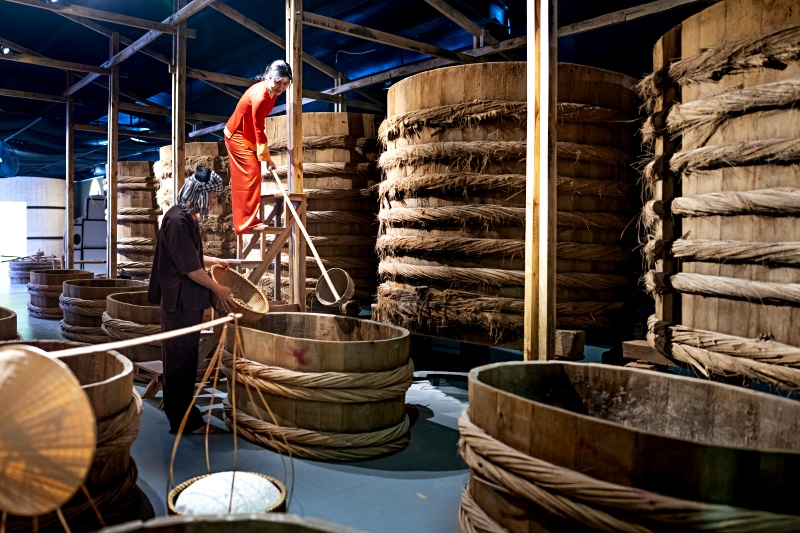
Khai Hoan is one of the most storied producers on the island. Their facility sits beside the Hung Vuong Bridge, along the river — a working location whose story is inseparable from the fishing community: the seasonal hauls, the weather, the patient waiting.
Other names worth knowing: Dai Duc, Thanh Quoc, Phung Hung, Hong Duc,… each with its own family history and fermentation approach.
Visiting a working nhà thùng is one of the best Phu Quoc things to do that most travelers skip entirely. The smell is overwhelming and honest. The barrels are enormous. The process is exactly what it has always been.
Watch a Wooden Boat Take Shape
Along the Duong Dong River, in the old Khu Pho 8 neighborhood (nearby Duong Dong Market), wooden fishing boats are still hand-built the traditional way.
The workshops – called ụ tàu – have been part of island life for over a hundred years. A master craftsman here can spend a decade learning the trade before he’s trusted to work alone. The knowledge isn’t documented anywhere. It moves from one pair of hands to the next.
These aren’t tourist attractions. They’re working yards. Walk past in the early morning, and you’ll hear the sound before you see it: mallets, sawdust, the low heat of the fire.
Each boat represents a significant investment for a fishing family – and the craftsmen know it. The work is done with that weight in mind.
Fitting that a Phu Quoc itinerary should start here. With the craft that made the island what it is.
Go Underwater With a Guide Who Knows What’s Down There
Phu Quoc’s reefs are still surprising – coral formations, parrotfish, rabbittfish, sea fans, the occasional cuttlefish, sea turtles,… tucked between coral heads,… But what you find underwater depends entirely on who is guiding you.
Onbird Phu Quoc keeps groups small, with 8 to 12 guests depending on the route. The guides name the marine life before you take a plunge and also point out in the water, not on a laminated card handed out at the dock.
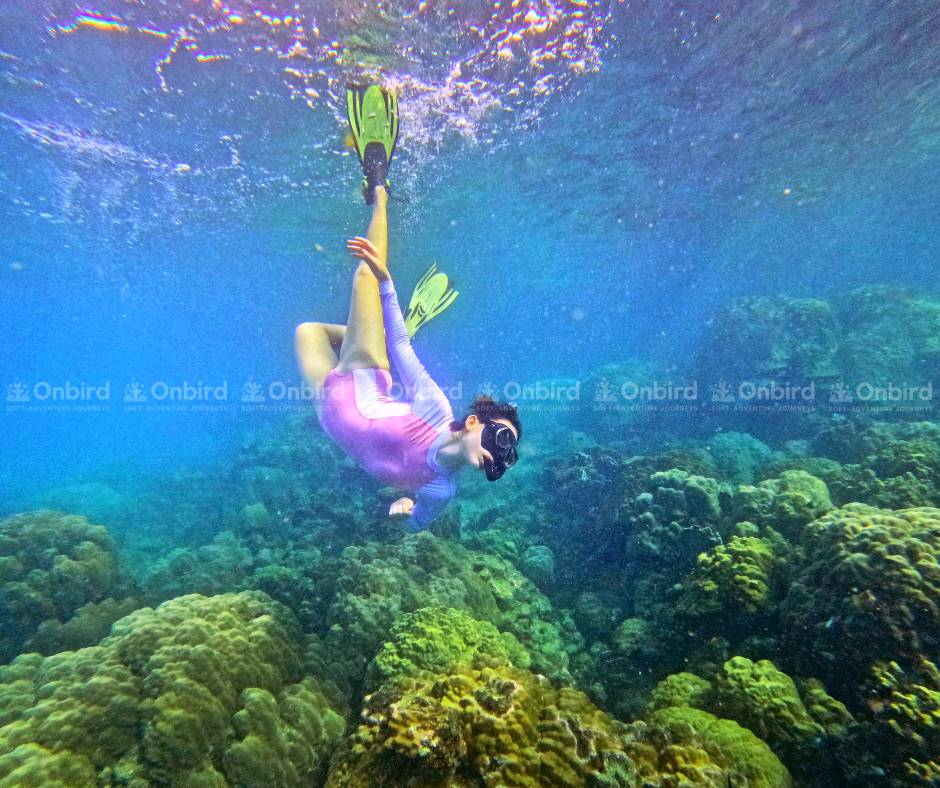

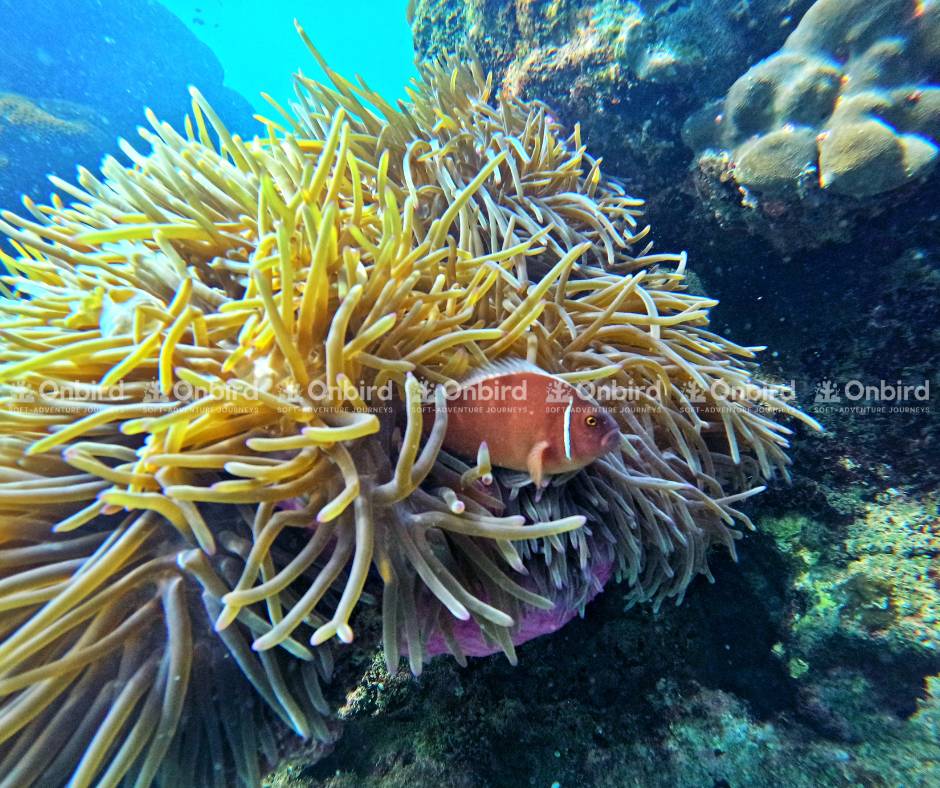
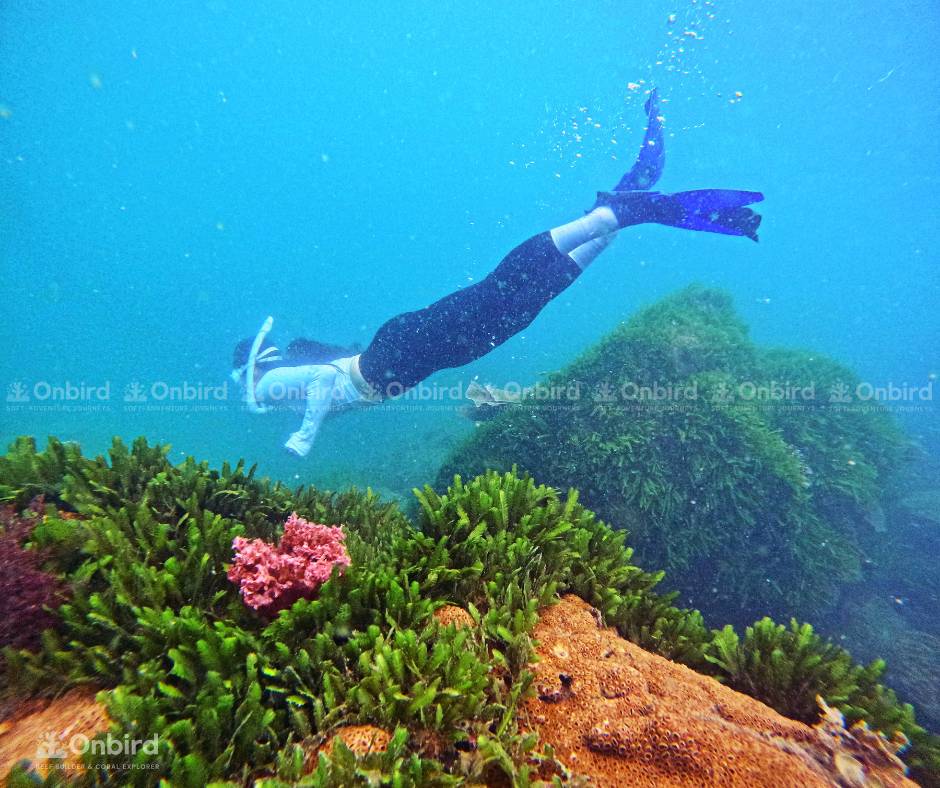
Some of those guides grew up here – children of fishing families who learned the sea before they learned a classroom. They can free-dive, read currents, hold breaths up to 2 minutes, and spot a marine species at three meters without effort. Onbird trained them: marine ecology, sustainable tourism practice, English professionalism,…skills that let them stay on the island they grew up on, doing work that matters. Others came back after university in the cities, choosing to return and share what this coastline actually holds.
The result is a team that is genuinely from here – and genuinely cares what happens to the reef.



Onbird is also the first operator in Phu Quoc conducting active coral reef restoration alongside marine biologists – documenting bleaching patterns and replanting since May 2025.
The Chillax Hideaway Snorkeling & Sunset Island BBQ runs Monday, Wednesday, Friday, and Sunday — four islands, two reef stops, a sunset BBQ on the west coast. The South Phu Quoc Snorkeling tour runs daily, capped at 8 to 10 guests.
Comprehensive Monthly Phu Quoc Weather Guides Based on OnBird’s Observations
Phu Quoc Is Changing – Here’s What to Know
For travelers planning, Phu Quoc in 2026 and 2027, it will look different from how it did even two years ago.
On March 21, 2026, Changi Airports International – operator of Singapore Changi Airport – signed a strategic partnership to co-manage Phu Quoc International Airport. The expansion covers a designed capacity of 20 million passengers per year, a second runway, and a dedicated VIP terminal, targeted for completion ahead of APEC 2027.
Sun Phu Quoc Airways launched a direct Seoul route in April 2026, with connections to Busan, Bangkok, Singapore, and Hong Kong expected to follow. Sun Group’s broader infrastructure investment continues to reshape the island’s south and east coasts.
For travelers who prefer to arrive with complete flexibility, JetVina operates direct charter flights from Hanoi and Ho Chi Minh City to Phu Quoc, as well as international routes from Seoul, Bangkok, Singapore, and beyond. With the new VIP terminal under development, the private arrival experience will soon match what’s already waiting on the ground.
→ JetVina: flights@jetvina.com | +84 396 919 611 | jetvina.com/request-a-quote
Plan Your Phu Quoc Itinerary With These in Mind
Phu Quoc rewards the traveler who slows down slightly!