

 Tiếng Việt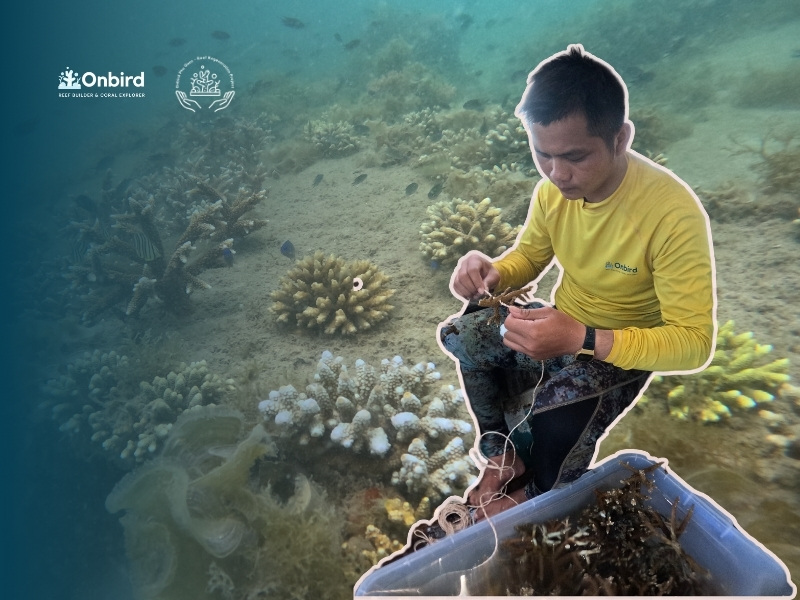
12-Month Progress Update (May 2025 – May 2026)
South Island Coral Nursery · Coral Transplantation in North Phu Quoc · Expansion to Four Southern Reefs
Video:
https://www.youtube.com/watch?v=uK9aSbPi-OY


MAIN CONTENTS
- Phase 1 — South Island Coral Nursery (Since May 2025)
- Phase 2 — Coral Transplantation at Turtle Island, North Phu Quoc (Since October 2025)
- Phase 3 — Expanding Coral Restoration Across Four Reefs in South Phu Quoc (April 2026)
- Restoration Methodology
- Why April Was Chosen for the Restoration Campaign
- Field Log — First Four Days of the April 2026 Restoration Campaign
- Post-Restoration Monitoring Plan
- A Tourism Model That Gives Back to the Reef
- Coral Restoration Progress at Turtle Island
- Contact
Background
Phu Quoc is one of Southeast Asia’s most accessible tropical island destinations, located within easy reach of major tourism markets including South Korea, Japan, China, Thailand, and Russia. Every year, millions of visitors come to the island to enjoy its beaches, marine ecosystems, and underwater experiences.
However, years of rapid tourism growth and coastal development, combined with the increasing impacts of climate change, have placed significant pressure on Phu Quoc’s coral reef ecosystems.
During the summer of 2024, prolonged seawater temperatures exceeding 32°C (89.6°F) for nearly three months caused widespread coral bleaching across the island. Many reefs experienced bleaching rates of 70–95%, resulting in severe coral mortality and ecosystem degradation.
Since 2018, OnBird has operated responsible coral reef exploration experiences in Phu Quoc while continuously monitoring reef health and ecological changes.
In May 2025, OnBird partnered with marine scientists to launch the Reef Regeneration Project, a long-term coral restoration initiative funded directly through a portion of the company’s tour profits.
The following report summarizes the project’s progress from May 2025 through May 2026.
Phase 1 — South Island Coral Nursery (Since May 2025)
In May 2025, OnBird completed the construction of its coral nursery in South Phu Quoc. The nursery currently cultivates 14 coral species, including 11 reef-building species that play a critical role in maintaining Phu Quoc’s marine ecosystem.
Reef-Building Coral Species in the Nursery
- Acropora pulchra (Staghorn Coral)
- Acropora copiosa
- Acropora grandis
- Acropora hyacinthus
- Acropora millepora
- Acropora rosaria
- Acropora gemmifera
- Acropora glauca
- Turbinaria bifrons
- Pocillopora damicornis (Cauliflower Coral)
- Porites cylindrica (Finger Coral)
The nursery stock is sourced exclusively from naturally broken coral fragments or colonies damaged during the 2024 mass bleaching event.
Several colonies of Acropora pulchra, for example, were discovered partially buried in sand at depths of 10–15 meters. These surviving fragments were carefully recovered, propagated into smaller fragments, and grown within the nursery to establish new colonies.
No healthy coral colonies are collected from the wild. Every coral fragment used for propagation originates from naturally detached or damaged corals that would otherwise have little chance of survival.
Phase 2 — Coral Transplantation at Turtle Island, North Phu Quoc (Since October 2025)


Turtle Island (Hòn Đồi Mồi) was once home to one of Phu Quoc’s healthiest coral reefs, with approximately 90% live coral cover and more than 20 reef-building coral species.
Following the 2024 bleaching event, the reef suffered catastrophic losses, with an estimated 95–98% of its corals dying.
First Transplantation Campaign (October 2025)
During a five-day field campaign, OnBird transplanted more than 200 coral fragments representing seven species onto the degraded reef:
- Acropora rosaria
- Acropora pulchra
- Acropora grandis
- Pocillopora damicornis
- Porites cylindrica
- Acropora millepora
- Acropora glauca
Second Transplantation Campaign (May 2026)
A second restoration campaign followed in May 2026, using larger nursery-grown coral colonies to accelerate reef recovery. Four priority species were selected:
- Acropora pulchra
- Porites cylindrica
- Acropora millepora
- Acropora glauca
Early Monitoring Results
Field observations conducted during the second campaign showed encouraging early outcomes.
Coral fragments transplanted in October 2025 had grown noticeably larger after approximately seven months, with an observed 95% survival rate.
These preliminary results indicate that the transplanted colonies have successfully attached to the natural reef substrate and are continuing to develop under local environmental conditions.


Phase 3 — Expanding Coral Restoration Across Four Reefs in South Phu Quoc (April 2026)
In April 2026, OnBird launched the first phase of a large-scale coral transplantation campaign across four fringing reefs in South Phu Quoc. The project utilized nursery-grown corals that had been cultivated for one year in the South Island Coral Nursery.
Campaign Overview
| Category | Details |
|---|---|
| Implementation period | 15 days |
| Restoration sites | 4 fringing reefs in South Phu Quoc |
| Coral colonies transplanted | 500+ |
| Water depth | 1–4 meters |
The Four Restoration Sites
The first phase focused on four accessible fringing reefs that can be safely reached during Phu Quoc’s southwest monsoon season (April–October):
- Little Hill Reef
- North Little Hill Reef
- Sword Reef
- Turtlehead Reef
Among these sites, Sword Reef offers particularly favorable conditions for coral restoration. With shallow depths ranging from 0.5 to 4 meters, broad sandy terraces, and extensive areas of naturally dead coral skeletons, the reef provides abundant stable substrate for coral attachment without introducing artificial structures or foreign materials into the marine environment.
Coral Species Used During This Campaign
Acropora pulchra (Staghorn Coral)
This was the primary restoration species for the campaign.
After one year of cultivation in the South Island Coral Nursery, nursery-grown colonies reached 15–30 cm before transplantation. Under suitable environmental conditions, this fast-growing species can extend by 15–40 cm per year.
Its complex branching structure creates important shelter and nursery habitat for juvenile reef fish and numerous marine invertebrates.
Porites cylindrica (Finger Coral)
Unlike many branching corals, Porites cylindrica demonstrated remarkable resilience during the 2024 mass bleaching event.
Field observations indicate that this species has adapted relatively well to the island’s new thermal conditions, with annual growth rates reaching up to 5 cm.
Because of its resilience, OnBird has identified it as one of the priority species for long-term reef restoration and nursery propagation.
Acropora rosaria (Cherry Blossom Coral)
Also introduced during the first restoration phase, Acropora rosaria has demonstrated growth rates of approximately 10–12 cm per year.
The Phu Quoc population displays a distinctive emerald-green coloration, a characteristic that differs noticeably from colonies of the same species observed elsewhere across Southeast Asia.
Restoration Methodology
The restoration strategy combines two transplantation techniques:
- 95% large-fragment transplantation, enabling rapid habitat recovery through mature coral colonies.
- 5% micro-fragmentation, supporting long-term propagation and future nursery stock.
Rather than deploying artificial reef structures, transplanted corals are attached directly onto naturally available reef substrate, including dead Porites colonies and existing limestone reef framework.
To secure each colony, the restoration team uses:
- Stainless steel nails for initial anchoring to hard substrate
- Galvanized wire to stabilize larger colonies during early attachment, which gradually corrodes over time
- Marine-safe biological adhesive to reinforce contact points and encourage natural skeletal attachment
This approach minimizes artificial materials while allowing transplanted corals to integrate naturally into the reef ecosystem.
Why April Was Chosen for the Restoration Campaign
Two key factors determined the timing of the April 2026 deployment.
Nursery Capacity
After one year of growth, many nursery colonies had exceeded the carrying capacity of the suspended nursery lines. Without timely transplantation, overcrowding would reduce growth as colonies begin competing for space and sunlight.
Seasonal Growth Conditions
Field observations suggest that coral fragments transplanted during the spring season typically grow 20–30% faster than those transplanted in autumn, providing a longer period of favorable environmental conditions before seasonal weather changes.
Field Log — First Four Days of the April 2026 Restoration Campaign
As the restoration team became more familiar with each reef’s underwater terrain and refined the transplantation process, daily productivity increased significantly.
| Date | Reef Site | Coral Species | Progress |
|---|---|---|---|
| 17 April | Little Hill Reef (Northeast Side) | Acropora pulchra | 5 restoration points · 25 fragments |
| 20 April | 200 m East of the Coral Nursery | Acropora pulchra | 8 restoration points · 11 colonies across 7 nursery lines |
| 22 April | Sword Reef (Northeast Side) | Acropora pulchra | 8 restoration points · Entire batch from 8 nursery lines transplanted |
| 24 April ★ | Sword Reef (Northeast Side) | Acropora pulchra, Acropora rosaria, Porites cylindrica | 132 coral colonies transplanted following the reef’s natural topography |
Within just four working days, the team’s daily output increased from 25 coral fragments on the first deployment to 132 coral colonies by Day Four, reflecting growing efficiency, improved coordination, and a deeper understanding of the reef’s natural structure.
Post-Restoration Monitoring Plan
Long-term monitoring is an essential component of the Reef Regeneration Project. Following the completion of the April campaign, OnBird’s underwater monitoring team will return to each restoration site at three key milestones.
+30 Days
- Assess initial survival rates
- Inspect attachment strength
- Identify any colonies requiring maintenance
+90 Days
- Measure branch extension and colony growth
- Document overall coral health and structural development
+180 Days
- Evaluate habitat recovery
- Record the return of reef fish and other marine organisms using the newly restored coral habitat
At the same time, propagation efforts at the South Island Coral Nursery will continue.
Additional nursery stock of Acropora grandis and Porites cylindrica is being cultivated in preparation for the next phase of restoration across South Phu Quoc.
A Tourism Model That Gives Back to the Reef
The Reef Regeneration Project is funded directly through a portion of the profits generated by OnBird’s responsible coral reef experiences in Phu Quoc.
Every guest who joins an OnBird snorkeling or reef exploration tour contributes to the long-term restoration of the very ecosystems they come to experience. During the summer season, visitors may also have the opportunity to observe selected restoration sites as part of their guided itinerary.
OnBird describes this approach as regenerative tourism—a model in which tourism not only minimizes environmental impact but actively helps restore natural ecosystems.
By reinvesting tourism revenue into coral conservation, reef monitoring, and restoration activities, each visitor becomes part of the ongoing effort to protect Phu Quoc’s underwater heritage for future generations.
Coral Restoration Progress at Turtle Island
Seven Months After Transplantation


The latest monitoring at Turtle Island has documented encouraging early signs of recovery. Coral colonies transplanted during the first restoration campaign have continued to grow, firmly attach to the natural reef substrate, and begin rebuilding the structural complexity essential for reef ecosystems.
While coral reef restoration is a long-term process that requires continuous monitoring over many years, these early results provide positive evidence that nursery-grown coral transplantation can contribute to the recovery of severely bleached reefs in Phu Quoc.
Contact
For more information about the Reef Regeneration Project, please contact:
Project Website: onbird.vn/regeneration
Email: hello@onbird.vn