


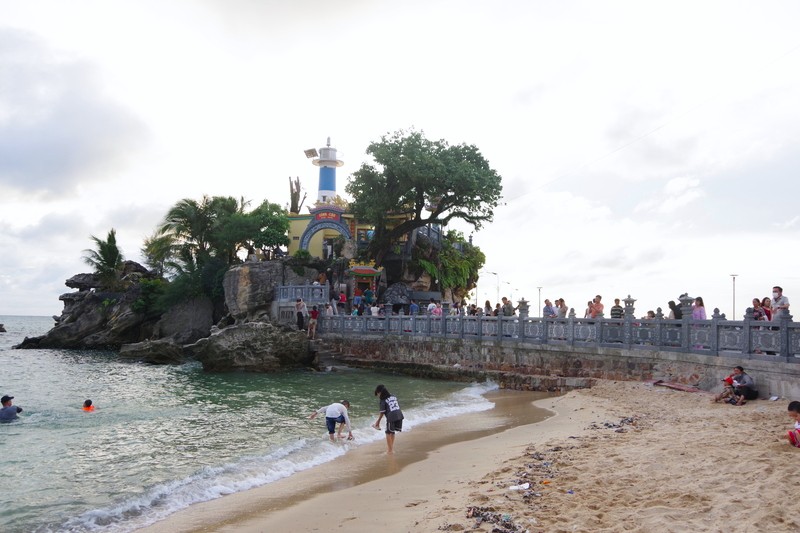
Amidst the gentle lapping of waves against the black rocks at the mouth of Duong Dong estuary, a shrine has silently witnessed thousands of voyages and returns of Phu Quoc fishermen. The islanders call it Dinh Cau – a place of faith before each sea voyage, a place where folk beliefs intertwined with the history of exploration and the formation of the island’s maritime culture have existed for generations.
MAIN CONTENTS
What is Dinh Cau like?
According to local accounts, in the old days, when the first inhabitants set foot on Phu Quoc Island, the sea was vast and turbulent. Sea voyages were frequently met with storms, and many who went out never returned. In that anxiety, one day, a strange rock formation suddenly appeared in the middle of Duong Dong estuary, rising from the water. The people believed it was a good omen, a divine intervention of the sea god, and they erected a small shrine on the rock to worship and pray for protection. Since then, fishing trips have become more successful, with calm seas and favorable weather, and fishermen consider this place sacred.
The name Dinh Cau is associated with the worship of the Goddess Ngoc Nuong Nuong and her two sons, Cau Tai and Cau Quy – symbols of wealth and good fortune. People believe that the two “Cau” always bless them with bountiful harvests and peaceful lives. Over generations, Dinh Cau has become a spiritual symbol, a place where fishermen pray for safety before each fishing trip.
Today, Dinh Cau is not only a sacred place of worship but also a famous cultural and tourist destination. During the festival in the tenth lunar month, people hold sea worship ceremonies and processions, attracting many tourists. Besides its spiritual value, Dinh Cau is also known as one of the most beautiful places to watch the sunset on Phu Quoc Island, possessing both the mystique of legend and a testament to the close connection between humans and the sea.
Little-Known Symbols
Dinh Cau is located at the mouth of the Duong Dong River, on a natural rocky outcrop jutting out into the sea. According to folklore, the shape of the rocky outcrop resembles a turtle’s head facing the sea, a symbol of protection and longevity in East Asian culture. This location was once an important maritime gateway for Phu Quoc, a place fishermen passed through on each trip out to sea and also the first place they hoped to see upon their return.

From Dinh Cau, visitors can gaze out at the mouth of the Duong Dong River, fishing boats, and the sea to the west of the island. It is also one of the few places that allows you to simultaneously feel the connection between the sea, fishing, and cultural life that has contributed to the formation of Phu Quoc as it is today.
Stories about Dinh Cau are now part of the Phu Quoc Soul tour by OnBird, where visitors can explore the lesser-known cultural and historical values of the island.
What to do when visiting Dinh Cau?
The people of Phu Quoc often refer to their seafaring profession as the “Ba-Cau” profession. Before each fishing trip, many fishermen maintain the habit of praying for safety, and when passing by Dinh Cau, they often turn towards the shrine to entrust their faith. Therefore, Dinh Cau is not only a place of worship but also a spiritual anchor deeply connected to the lives of fishermen for generations.
Every year, on the 15th and 16th of the 10th lunar month, the Dinh Cau Festival takes place here – an important folk festival of the pearl island. During this time, people pray for favorable weather, calm seas, and bountiful fishing seasons. Over time, the festival has become a symbol of the deep connection between the people of Phu Quoc and the sea.


The legend of Dinh Cau is one of many folk stories reflecting the beliefs of the island’s inhabitants. Tourists interested in this topic can explore more about Phu Quoc’s history to better understand the spiritual life of the island’s people.
Why is Dinh Cau always the first destination in Phu Quoc?
Dinh Cau is a suitable destination for families, those who love culture and spirituality, as well as first-time visitors to Phu Quoc. In just about an hour, visitors can learn more about the lives of local fishermen, the beliefs associated with the sea, and why the locals always pray for calm seas before each fishing trip.
Therefore, the visit is not just about sightseeing or taking photos, but also provides a deeper insight into the culture of the pearl island. Reece Stewart, a tourist from England, commented: Dinh Cau is “an interesting piece of Asian history,” showcasing the indomitable spirit of the Vietnamese people, with profound historical and cultural stories hidden behind its scenic beauty.

Dinh Cau is not only a famous sunset viewing spot, but also a place that preserves legends reflecting the spiritual life of the people of Phu Quoc. When included in the Phu Quoc Soul Tour by OnBird, the story of Dinh Cau becomes a piece of the puzzle that helps the whole family better understand the history, culture, and people of the Pearl Island. Let’s join the Phu Quoc Soul Tour to listen to the legends, beliefs, and memories that have made up the “soul” of Phu Quoc.