


 中文
中文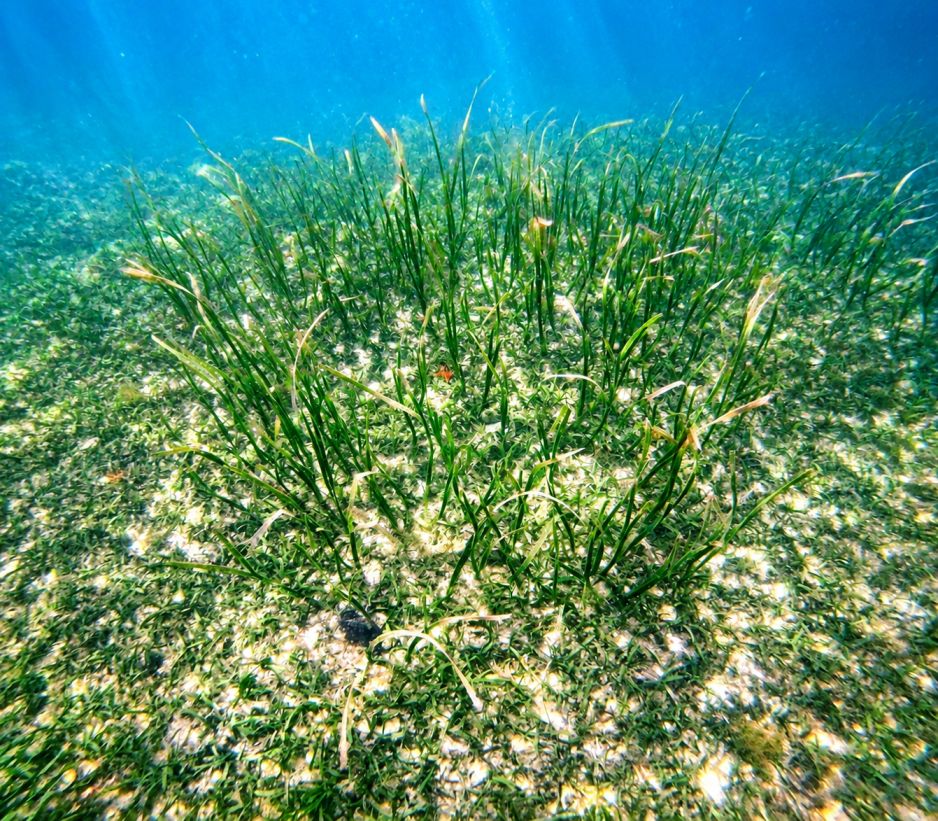
MAIN CONTENTS
- Beyond the Coral Reefs of Phu Quoc
- Vietnam’s Underwater Green Meadows
- Phu Quoc’s Seagrass Habitats
- Discovering the Sea Through Seagrass
- A Different Way to Snorkeling in Phu Quoc
- Exploring Responsibly with OnBird
- Why Protecting Seagrass Matters
- Seeing Phu Quoc Beneath the Surface
- Discover Seagrass Snorkeling Phu Quoc with OnBird
Beyond the Coral Reefs of Phu Quoc
When people think about snorkeling in Phu Quoc, coral reefs are often the first thing that comes to mind. Clear tropical water, colourful fish, rocky islands and shallow reefs have long been part of the island’s underwater appeal. Yet beneath those familiar images lies another marine landscape that receives far less attention: the seagrass meadows growing in the shallow coastal waters around the island.
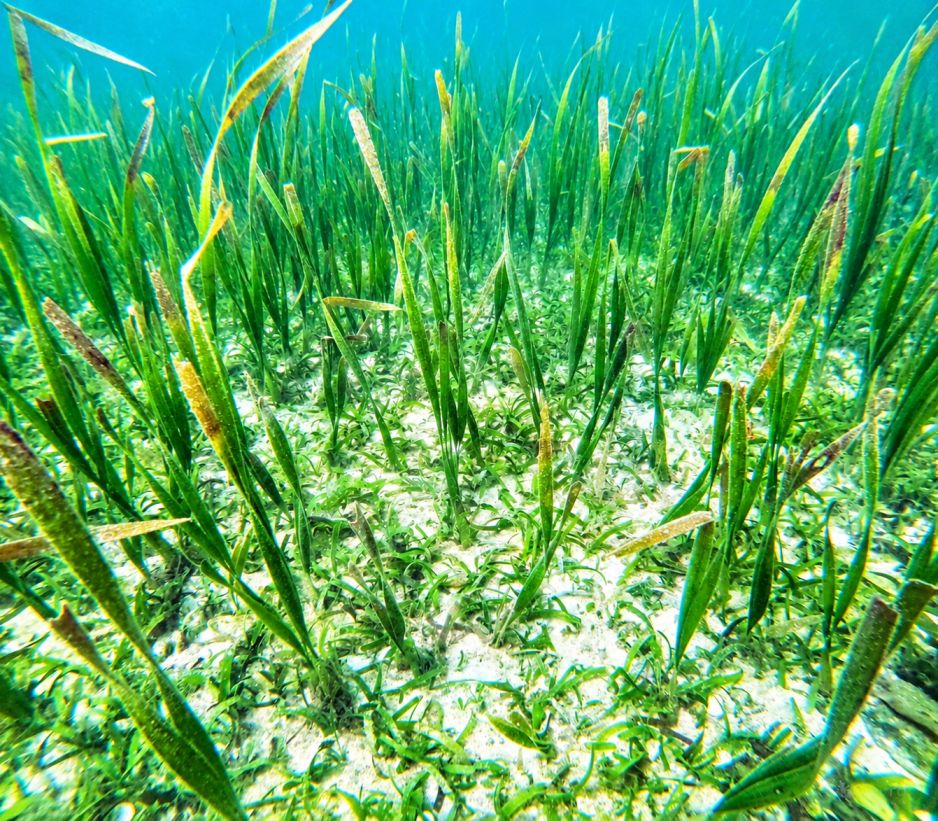
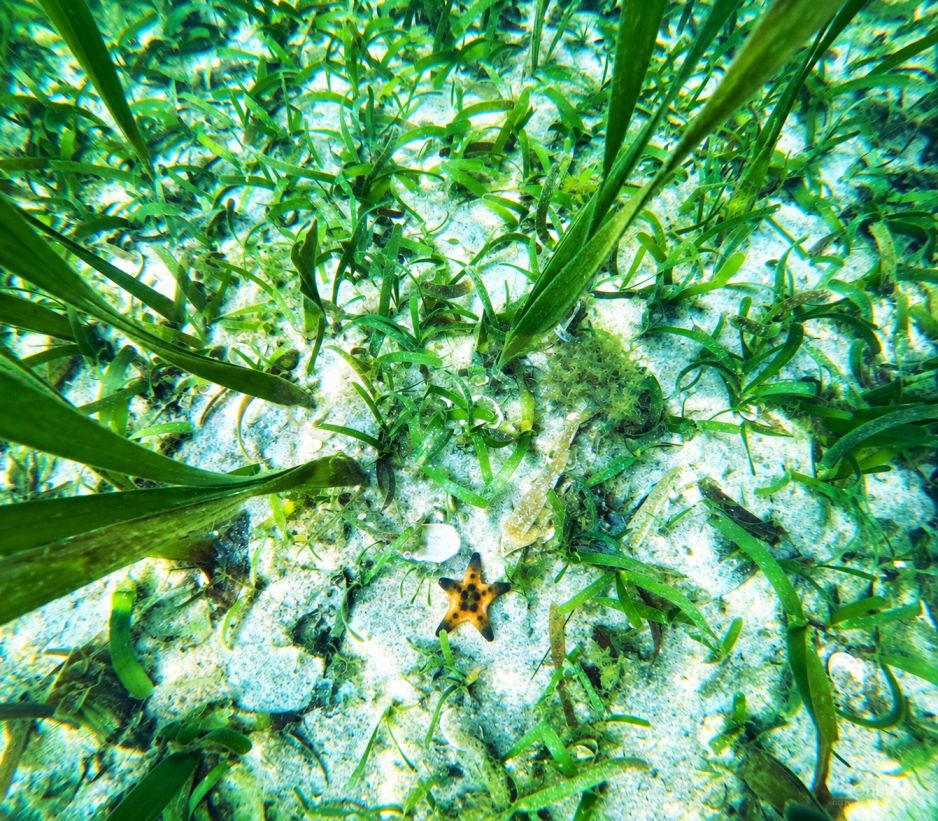
From the surface, a seagrass meadow can look almost ordinary. Once you put your face beneath the water and spend a little time looking, however, the scene begins to change. Long green leaves move gently with the current, small fish weave between them, and tiny creatures appear and disappear across the sandy seabed. Sunlight reaches through the water and moves across the meadow as the surface shifts above you. What initially looks like a simple patch of underwater vegetation gradually reveals itself as a living habitat.
Vietnam’s Underwater Green Meadows
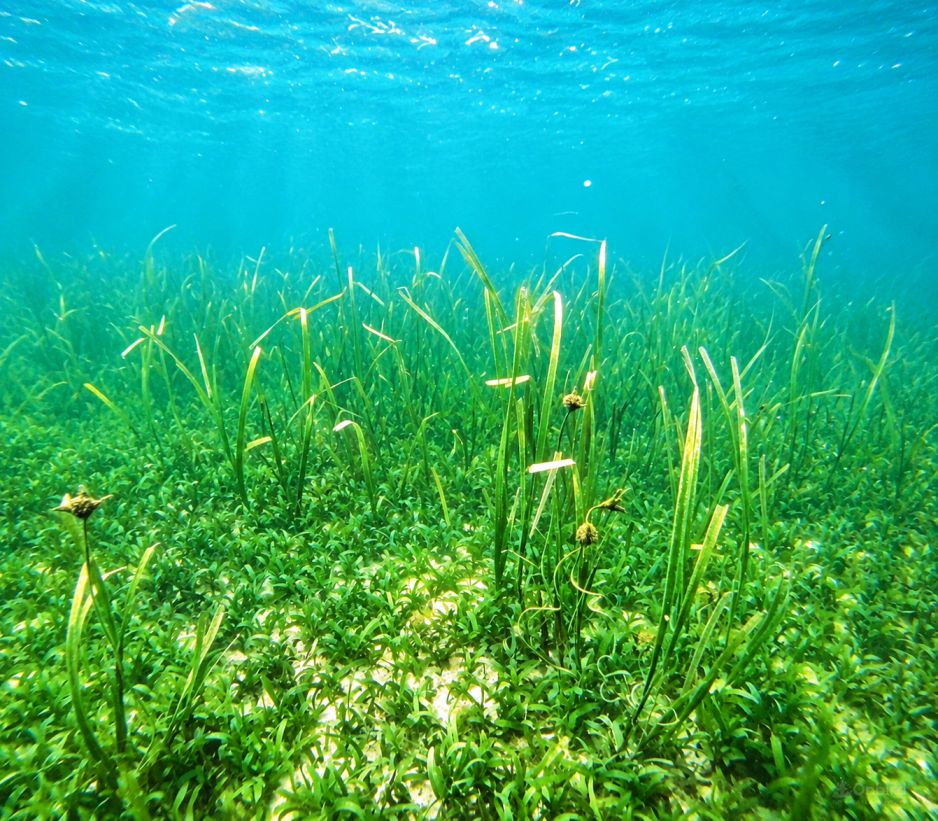
Seagrass is easy to confuse with seaweed, but the two are quite different. Seagrasses are flowering marine plants with roots, leaves and underground stems, growing mainly in shallow waters where sunlight can reach the seabed. Across the world, they form extensive underwater meadows that provide shelter and feeding grounds for a remarkable variety of marine life, from small invertebrates and fish to crabs, sea turtles and other animals.
Vietnam is home to a significant diversity of seagrass. Researches have identified 16 seagrass species in Vietnam’s shallow coastal waters, with seagrass meadows estimated to cover around 18,130 hectares. Many of these meadows are found along the country’s central and southern coastlines, where they form part of the wider network of coastal habitats that includes coral reefs and mangrove forests.
Their importance goes well beyond providing a place for marine life to hide. The roots and underground stems of seagrass help hold sediment in place and can contribute to protecting coastal areas from erosion. Because seagrass uses sunlight for photosynthesis, these underwater plants also play a role in the exchange of carbon dioxide and oxygen. More importantly, the meadows create a productive environment where many marine species can feed, shelter and grow.
Phu Quoc’s Seagrass Habitats
This is particularly relevant in Phu Quoc, where seagrass is recognised as an important part of the island’s marine environment. The Phu Quoc Marine Protected Area includes extensive zones dedicated to the protection and ecological recovery of seagrass.
More than 6,658 hectares have been designated as a strict protection zone for seagrass in the northeast of the island, while a further 11,362 hectares are included within an ecological restoration zone. The protected areas extend through the shallow waters along the northeastern coast, reflecting the scale and importance of these underwater habitats.
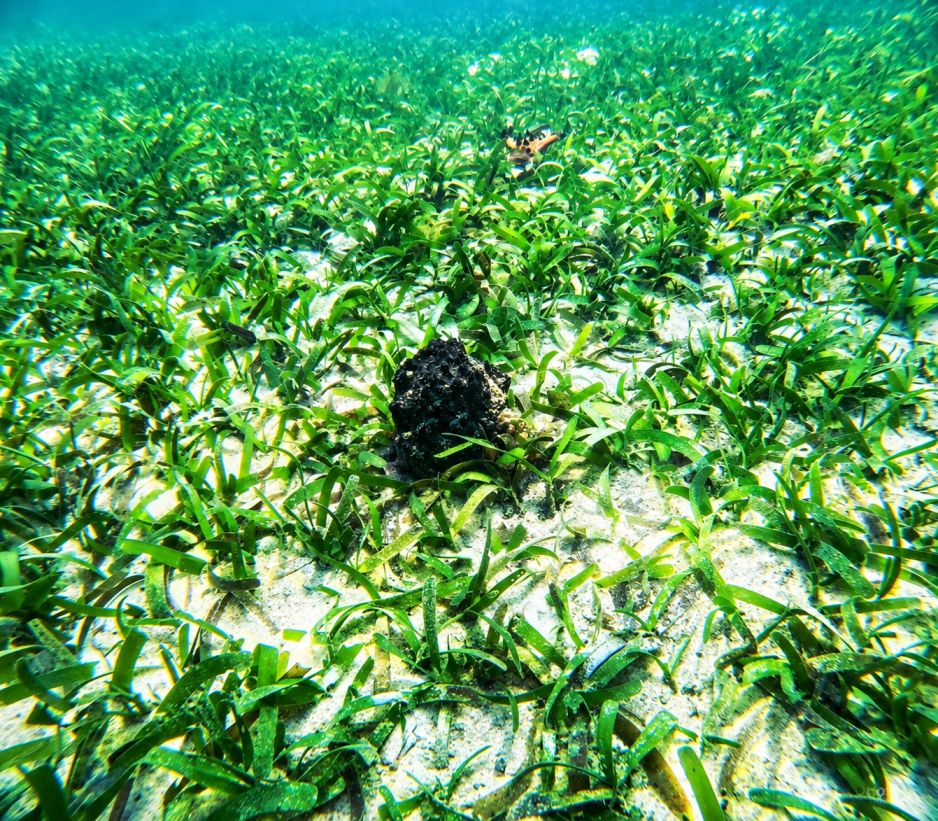
For visitors, however, the significance of seagrass is often easier to understand once you actually see it.
Discovering the Sea Through Seagrass
This is where Seagrass Discovery Phu Quoc begins.
Rather than approaching the ocean simply as a place to find colourful marine life, the experience is about taking a closer look at one of the ecosystems that quietly supports life along the coast. Once in the water, there is no need to rush. Floating above the meadow gives you time to notice how the landscape works: fish moving through the leaves, small animals resting on the seabed, patches of sand between the plants, and the constant movement created by waves and currents.
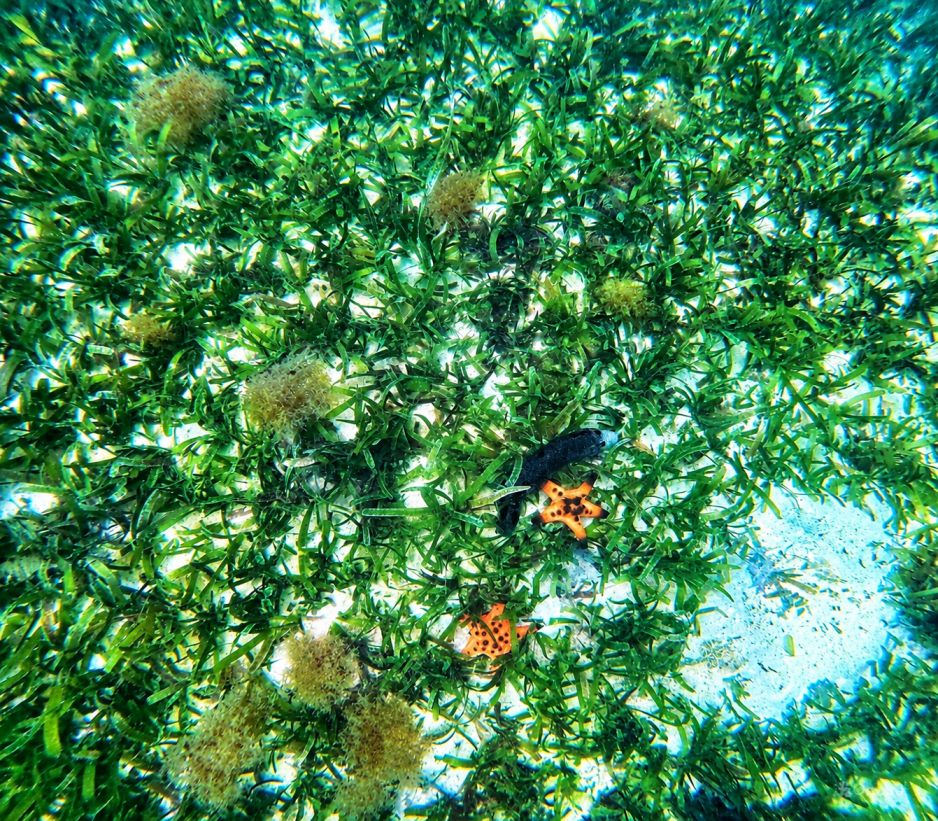
The experience can feel surprisingly immersive because the seagrass meadow changes depending on where you look. From a distance, it appears as one continuous green landscape. A few metres closer, it becomes a collection of individual plants and small habitats. Look carefully enough and the seabed begins to reveal details that are easy to miss when swimming quickly through the water.
A Different Way to Snorkeling in Phu Quoc
This slower way of exploring is one of the reasons we find Seagrass Snorkeling in Phu Quoc so rewarding. It encourages you to pay attention to the smaller parts of the marine environment rather than searching only for the most obvious sights.
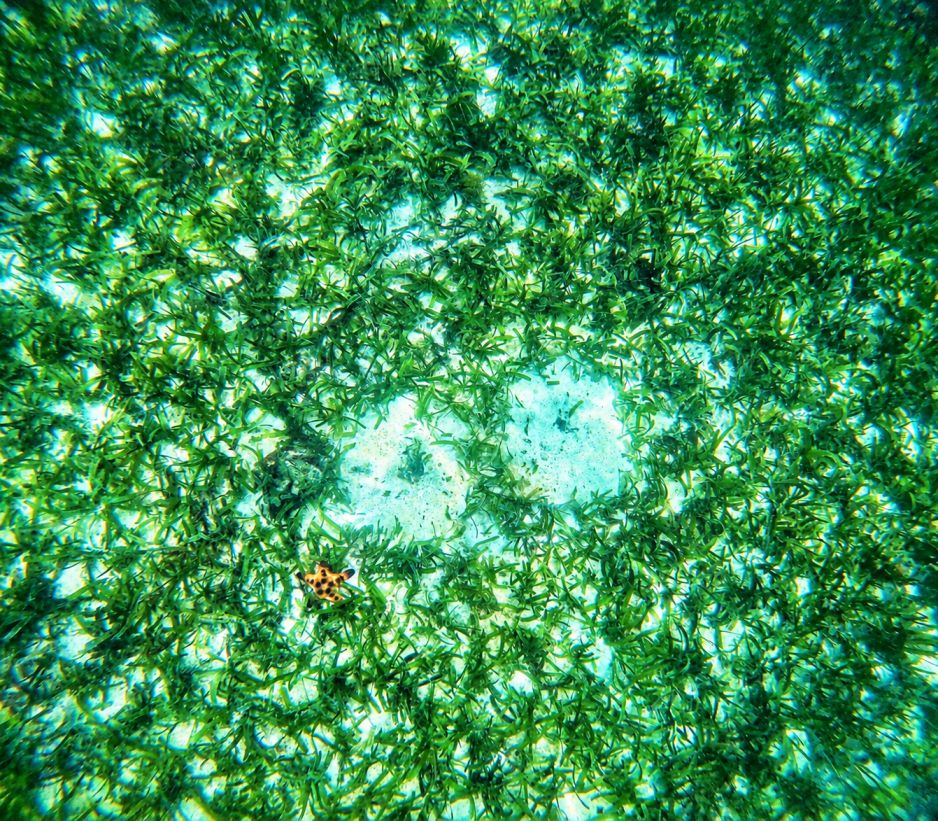
A meadow that might initially seem quiet can become unexpectedly interesting once you start noticing how many different forms of life depend on it.
It also changes the way we think about the relationship between different marine ecosystems. Coral reefs, seagrass meadows and mangroves are often talked about separately, but along the coast they exist as part of a connected environment. The health of one habitat can influence the others, while together they provide the conditions that allow marine life to feed, shelter, reproduce and move through different stages of their lives.
Exploring Responsibly with OnBird
For OnBird, this connection is an important part of exploring Phu Quoc. We believe that a meaningful snorkeling experience is not only about finding beautiful underwater scenery, but also about understanding what makes that environment special and learning how to visit it with care.
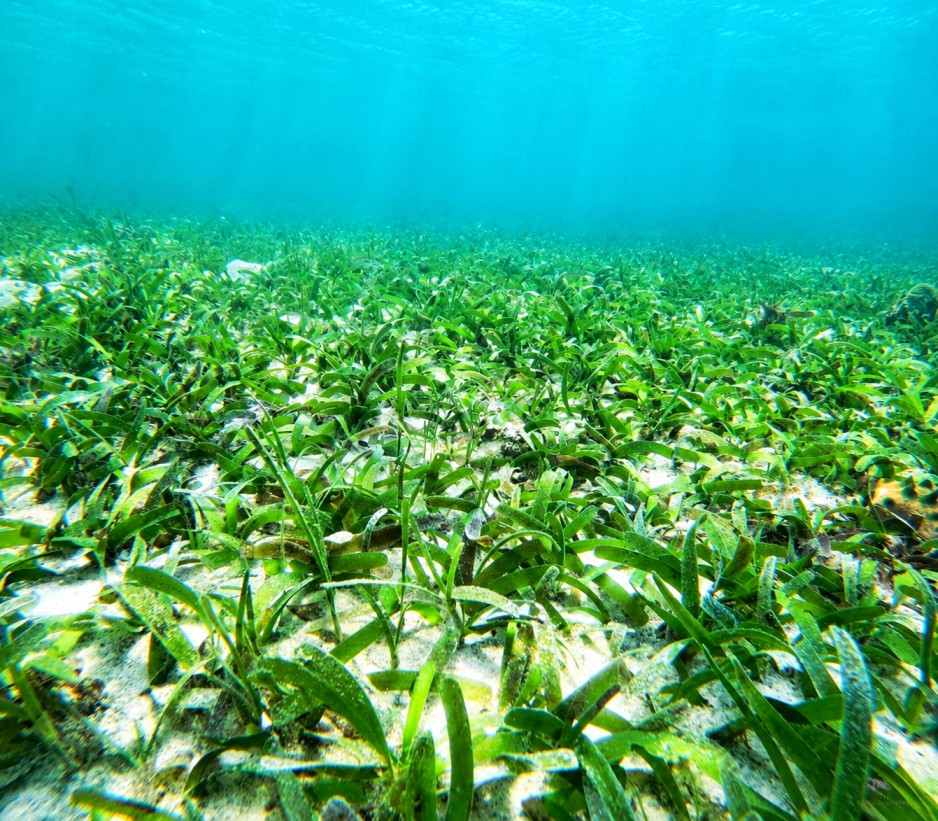
Seagrass Discovery was created from that perspective: to introduce guests to an ecosystem that is easy to overlook, while encouraging a more observant and responsible way of experiencing the sea.
That means keeping a comfortable distance from the seabed, avoiding contact with the plants and marine life, and allowing the environment to remain undisturbed while we observe it. These may seem like small things, but they become particularly important in shallow coastal habitats where marine life and vegetation can be sensitive to physical disturbance.
Why Protecting Seagrass Matters
The need for that care is becoming increasingly important. Seagrass can be resilient and capable of recovering through its underground stems and roots, but its shallow-water habitat also makes it vulnerable to declining water quality, pollution and physical disturbance.
VietNamNet’s overview of seagrass in Vietnam highlights the pressures created by pollution, coastal development and other impacts on marine habitats.
In Phu Quoc, the creation and expansion of protected and ecological restoration zones for seagrass reflects a growing recognition of its value. The island’s marine protected area is not only focused on preserving individual species or attractive underwater landscapes; it also aims to maintain the wider habitats that support marine biodiversity and coastal communities.
Seeing Phu Quoc Beneath the Surface
For travellers, this creates an opportunity to experience Phu Quoc in a slightly different way. Instead of seeing the sea only as a backdrop for a day on the island, snorkeling can become a chance to understand what is happening beneath the surface.
The more time you spend looking at the seagrass, the easier it becomes to see that this is not an empty patch of seabed. It is a living environment, constantly changing with the tide, light and movement of the water.
Perhaps this is what makes a Seagrass Discovery experience worth taking the time for. You may enter the water expecting to see a meadow of green plants, but after a while you start noticing the fish moving through it, the small creatures living around its roots and the subtle changes in the landscape as the current passes through.
The experience becomes less about seeing one particular attraction and more about understanding how an entire underwater habitat works.
Discover Seagrass Snorkeling Phu Quoc with OnBird
Phu Quoc has many ways to experience the sea, from coral reefs and island beaches to quiet coastal waters. Seagrass adds another layer to that picture. It is part of the natural landscape that has existed around the island long before tourism arrived, and protecting it means preserving an important part of what makes the waters of Phu Quoc alive.
For those who have already explored the island’s famous snorkeling sites, Seagrass Snorkeling Phu Quoc offers a chance to look at the sea from another angle. For first-time visitors, it can be an introduction to an ecosystem they may never have encountered before.
And once you have spent time floating above a seagrass meadow, watching the leaves move beneath you and seeing small fish disappear into the green, it becomes much easier to understand why these seemingly modest underwater plants deserve our attention.
Seagrass Discovery with OnBird is an invitation to take that time: to slow down in the water, look more closely at the world beneath the surface, and discover a part of Phu Quoc that many visitors pass without ever knowing it is there.