

MAIN CONTENTS
- Current Status of Marine Ecosystems & Coral Reefs in Phu Quoc
- Phase 1 – South Island Coral Nursery (since May 2025)
- Phase 2 – Coral Transplantation at Turtle Island, North Phu Quoc (since October 2025)
- Phase 3 – Expansion of Coral Restoration Across Four Southern Reefs (April 2026)
- Campaign Scale
- The Four Selected Reefs
- Three Coral Species Used in This Phase
- Transplantation Methodology
- Why the Restoration Was Launched in April 2026
Current Status of Marine Ecosystems & Coral Reefs in Phu Quoc
Phu Quoc is one of the tropical islands located closest to major Asian tourism markets such as South Korea, Japan, China, Thailand, and Russia. Every year, the island welcomes millions of visitors for leisure, marine exploration, and resort tourism.
After years of rapid infrastructure and tourism development, Phu Quoc’s marine ecosystem has come under increasing pressure — from coastal development and tourism expansion on one side, and climate change on the other. During the summer of 2024, many coral reefs around Phu Quoc experienced bleaching rates of 70–95% after seawater temperatures remained above 32°C for nearly three consecutive months, leading to severe reef degradation.
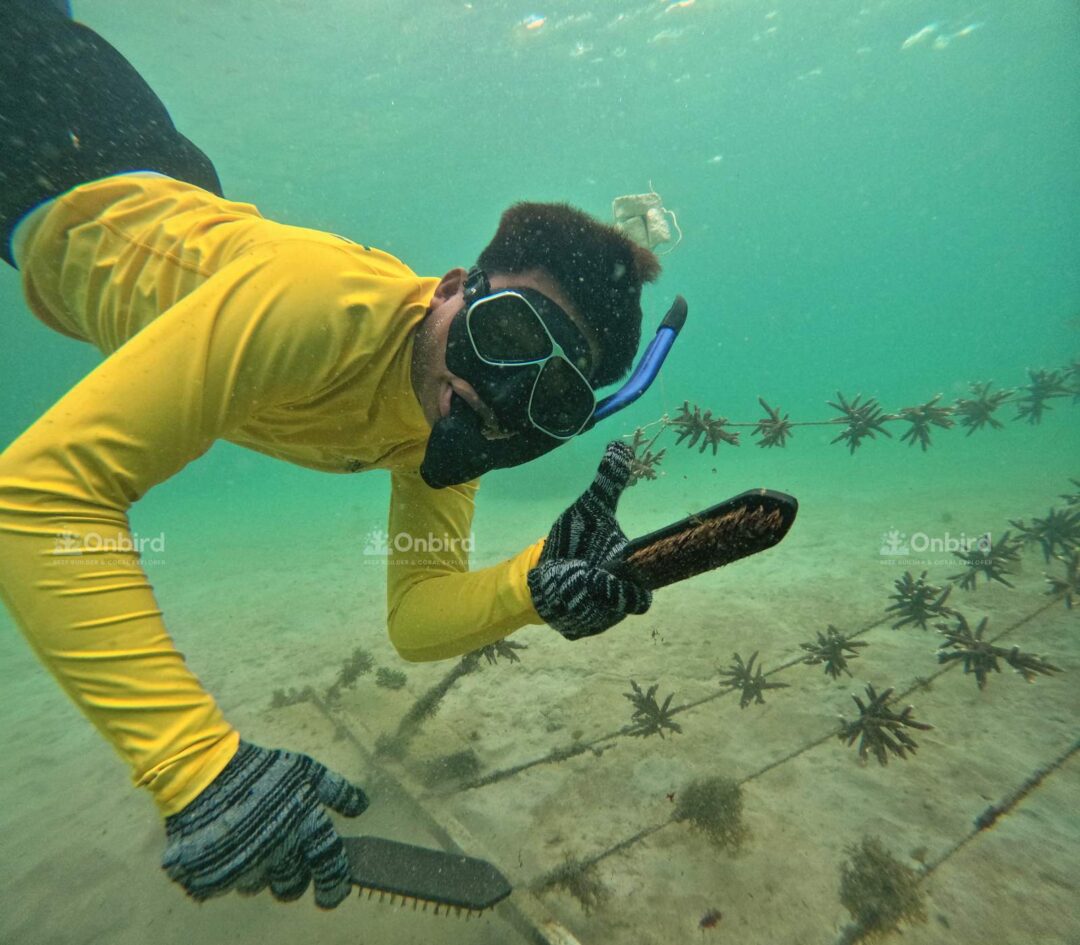
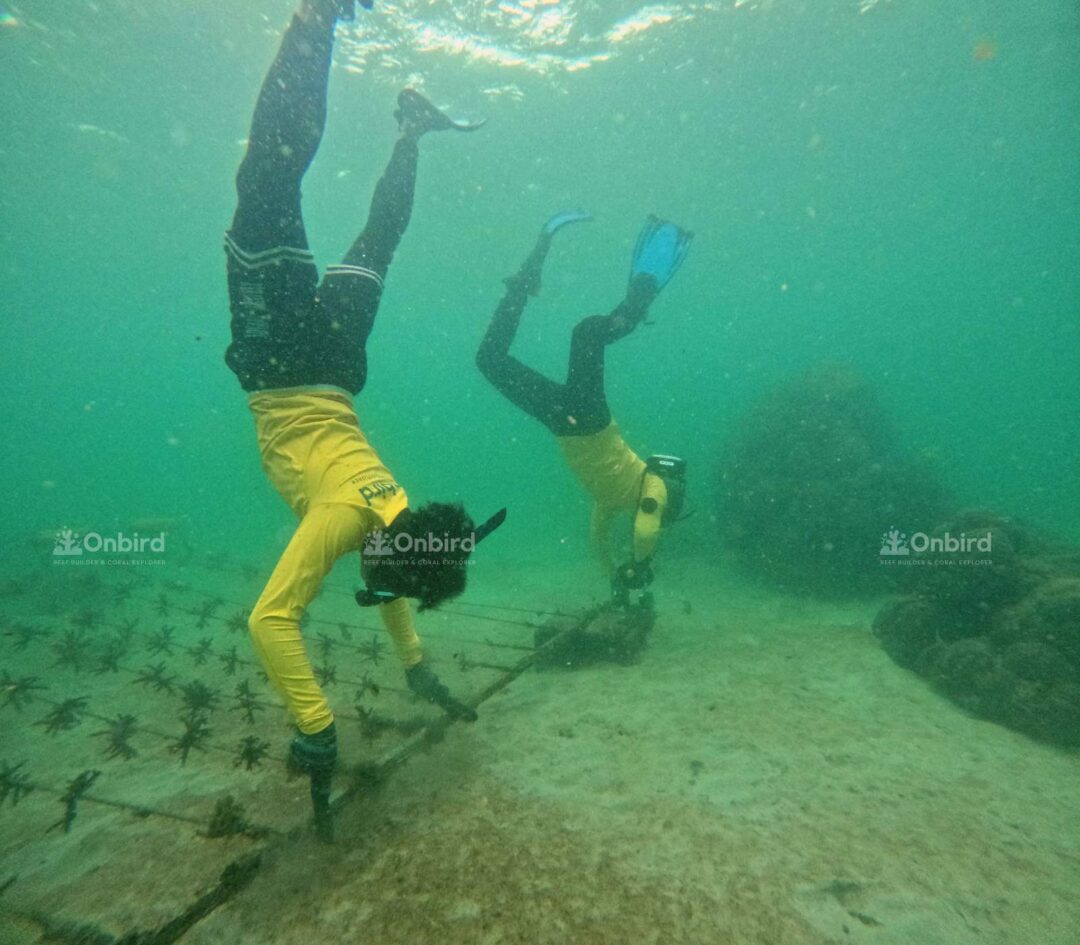
Operating in the coral reef exploration sector in Phu Quoc since 2018, OnBird Phu Quoc has monitored the condition of local reefs throughout this period. Since May 2025, OnBird has collaborated with marine scientists to launch a coral reef restoration project funded directly through profits generated from tour operations. Below is the project progress update as of May 2026.
Phase 1 – South Island Coral Nursery (since May 2025)
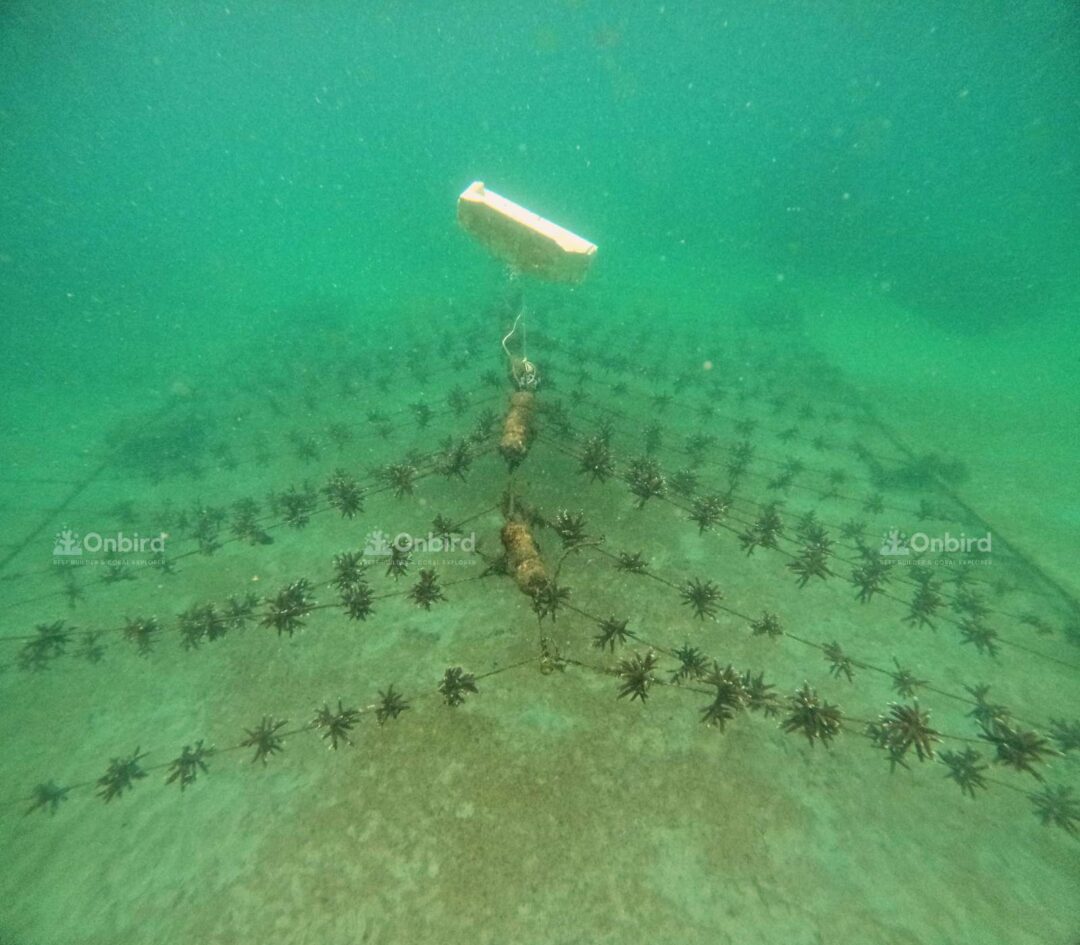
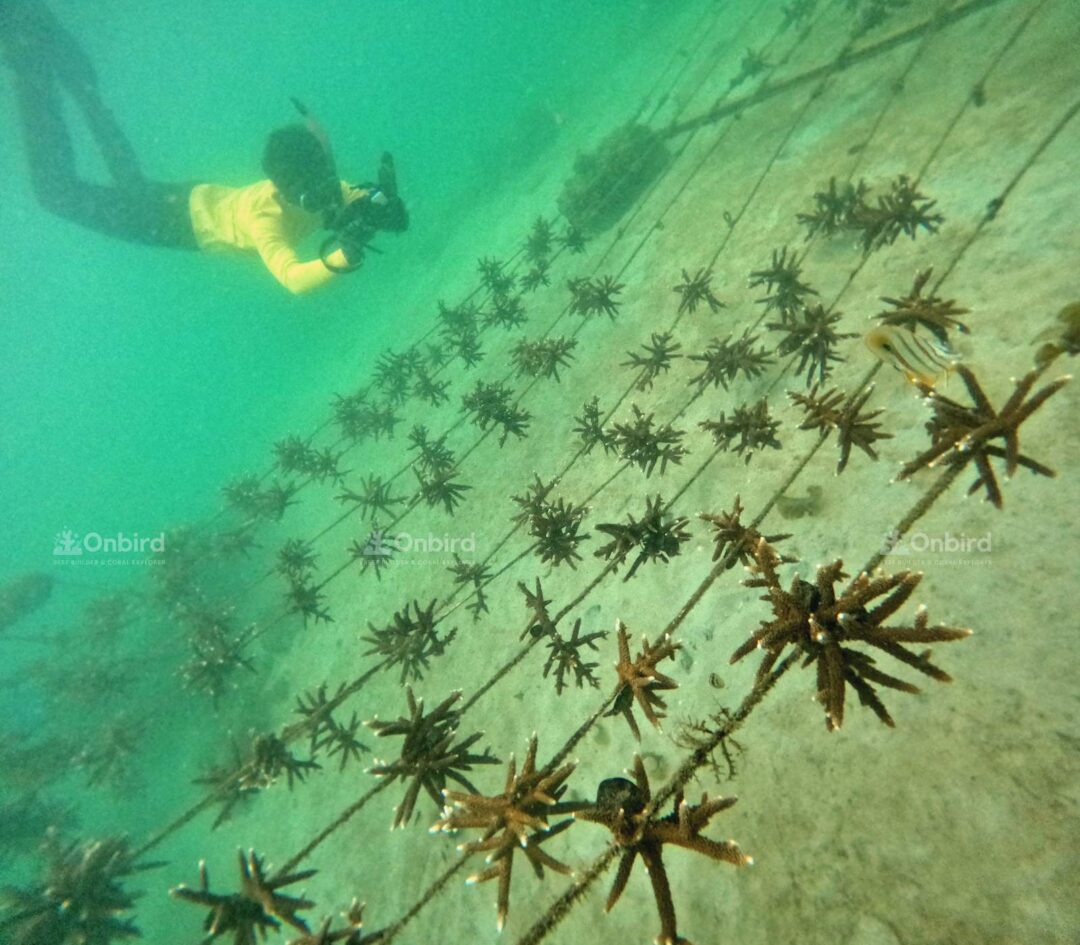
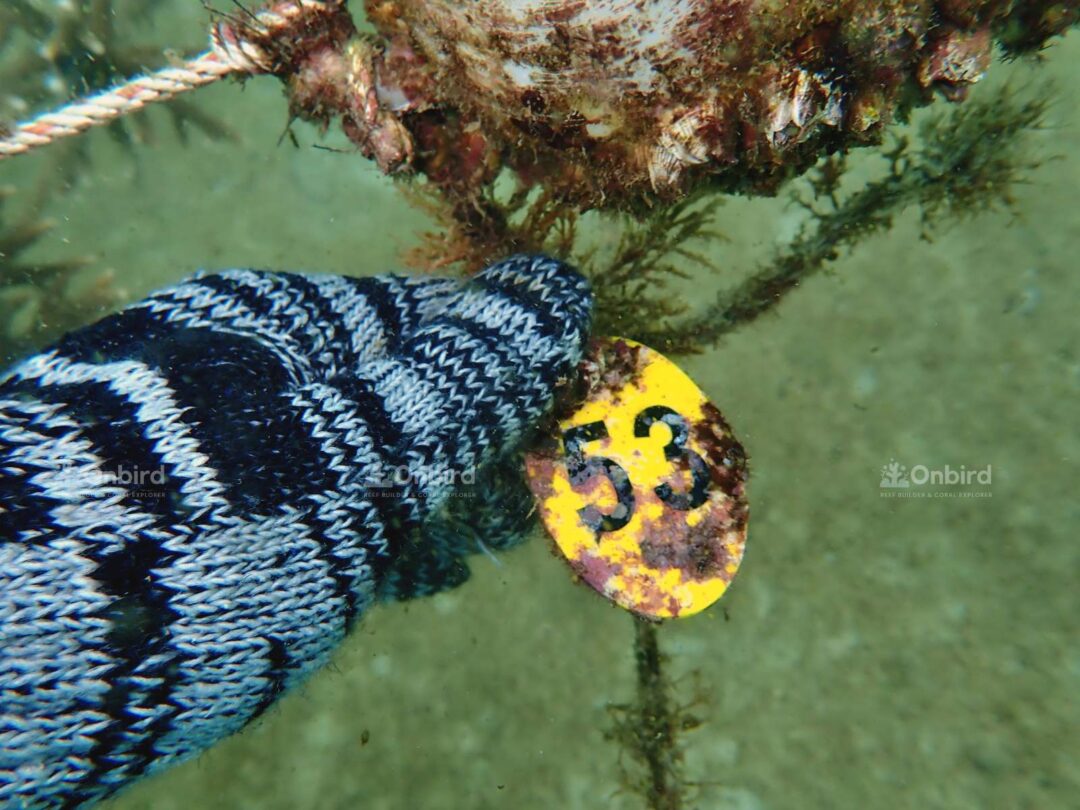
In May 2025, OnBird completed the construction of a coral nursery in South Phu Quoc. The nursery is currently cultivating 14 coral species, including 11 key reef-building species essential to the marine ecosystem of Phu Quoc:
- Acropora pulchra (Staghorn Coral)
- Acropora copiosa
- Acropora grandis
- Acropora hyacinthus
- Acropora millepora
- Acropora rosaria
- Acropora geremifera
- Acropora glauca
- Turbinaria bifron
- Pocillopora damicornis (Cauliflower Coral)
- Porites cylindrica (Finger Coral)
Coral fragments used for propagation were collected from degraded colonies or naturally broken fragments found after the 2024 bleaching event. Several colonies of Acropora pulchra were discovered partially buried in sand at depths of 10–15 meters and later transferred to the nursery for fragmentation and propagation.
The nursery operates under a strict principle:
no healthy coral colonies are collected from the wild.
Phase 2 – Coral Transplantation at Turtle Island, North Phu Quoc (since October 2025)
Turtle Island was once considered one of the healthiest coral reef systems in Phu Quoc, with coral cover reaching up to 90% and more than 20 reef-building coral species recorded. Following the 2024 bleaching event, the reef lost approximately 95–98% of its coral cover.
First Transplantation Campaign (October 2025)
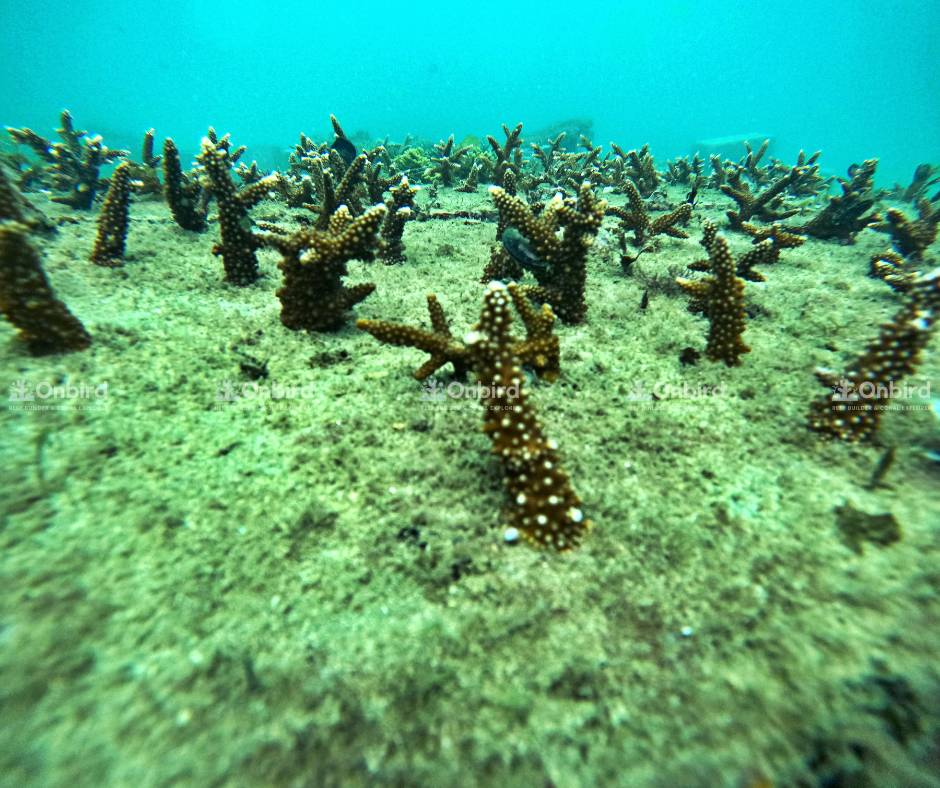
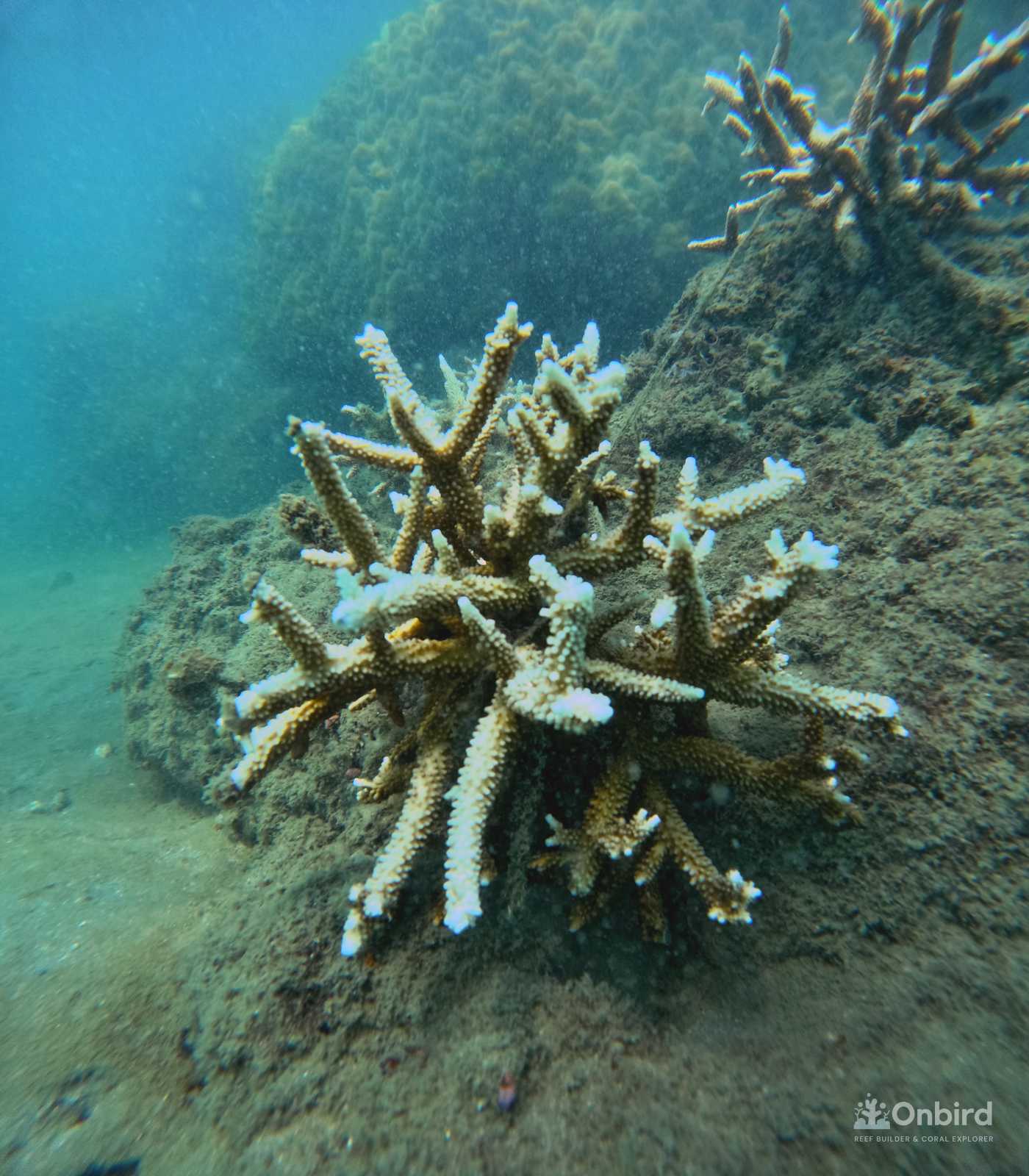
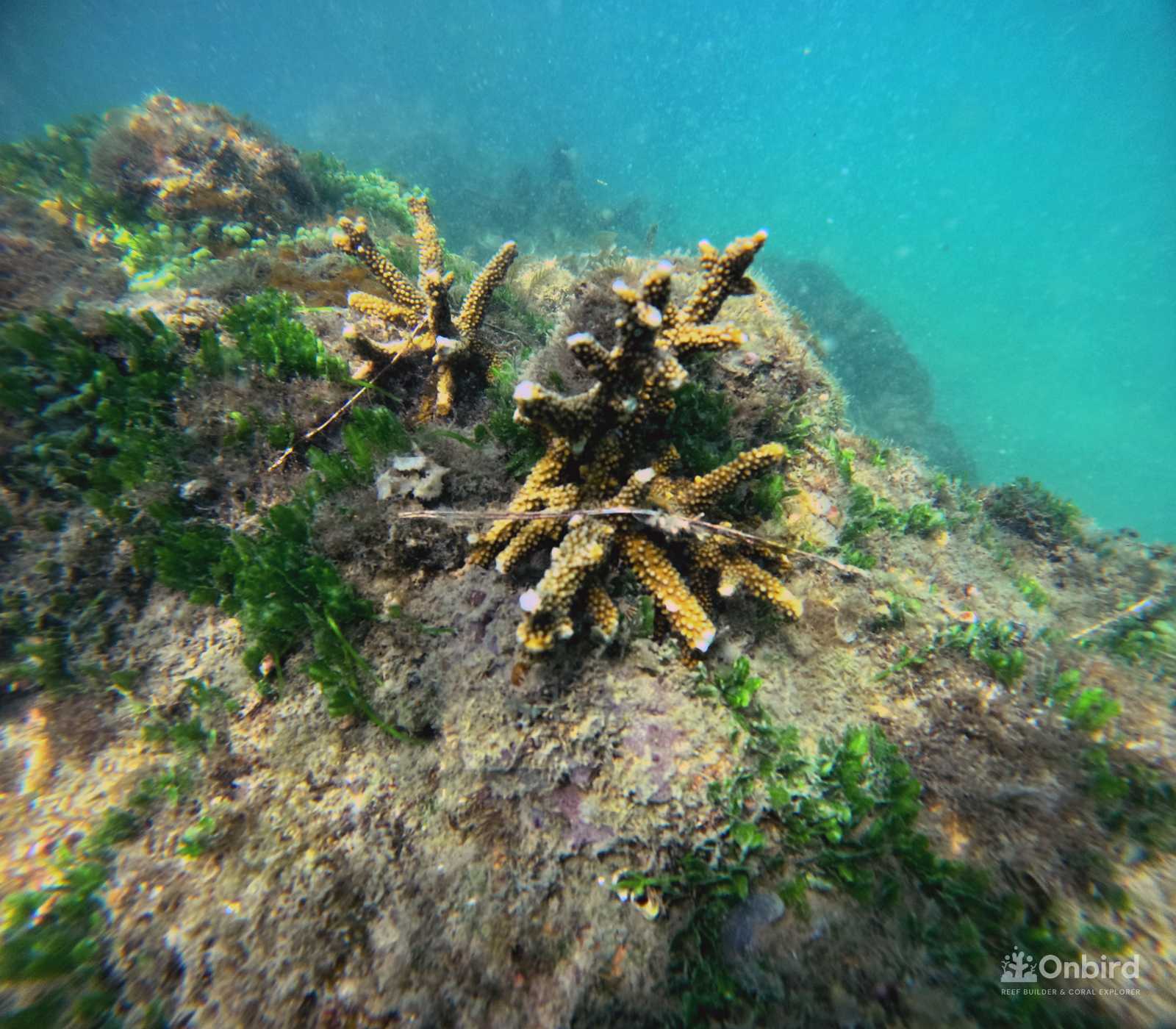
During the first restoration campaign, OnBird conducted a five-day transplantation effort, introducing more than 200 coral fragments from seven species into the reef area:
- Acropora rosaria
- Acropora pulchra
- Acropora grandis
- Pocillopora damicornis
- Porites cylindrica
- Acropora millepora
- Acropora glauca
Second Transplantation Campaign (May 2026)
In May 2026, OnBird carried out the second transplantation phase using large-fragment restoration techniques. Four primary species were added to the reef:
- Acropora pulchra
- Porites cylindrica
- Acropora millepora
- Acropora glauca
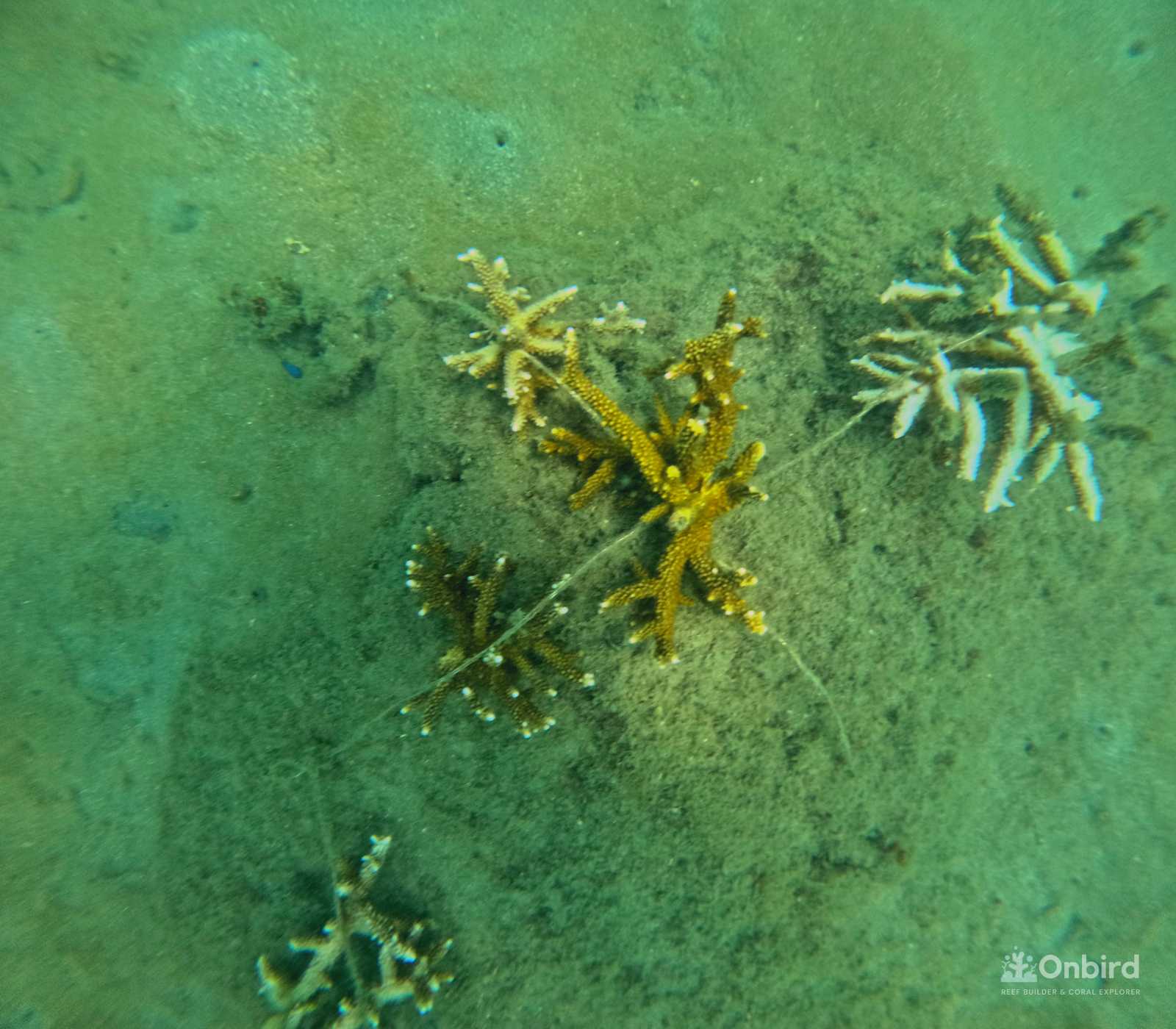
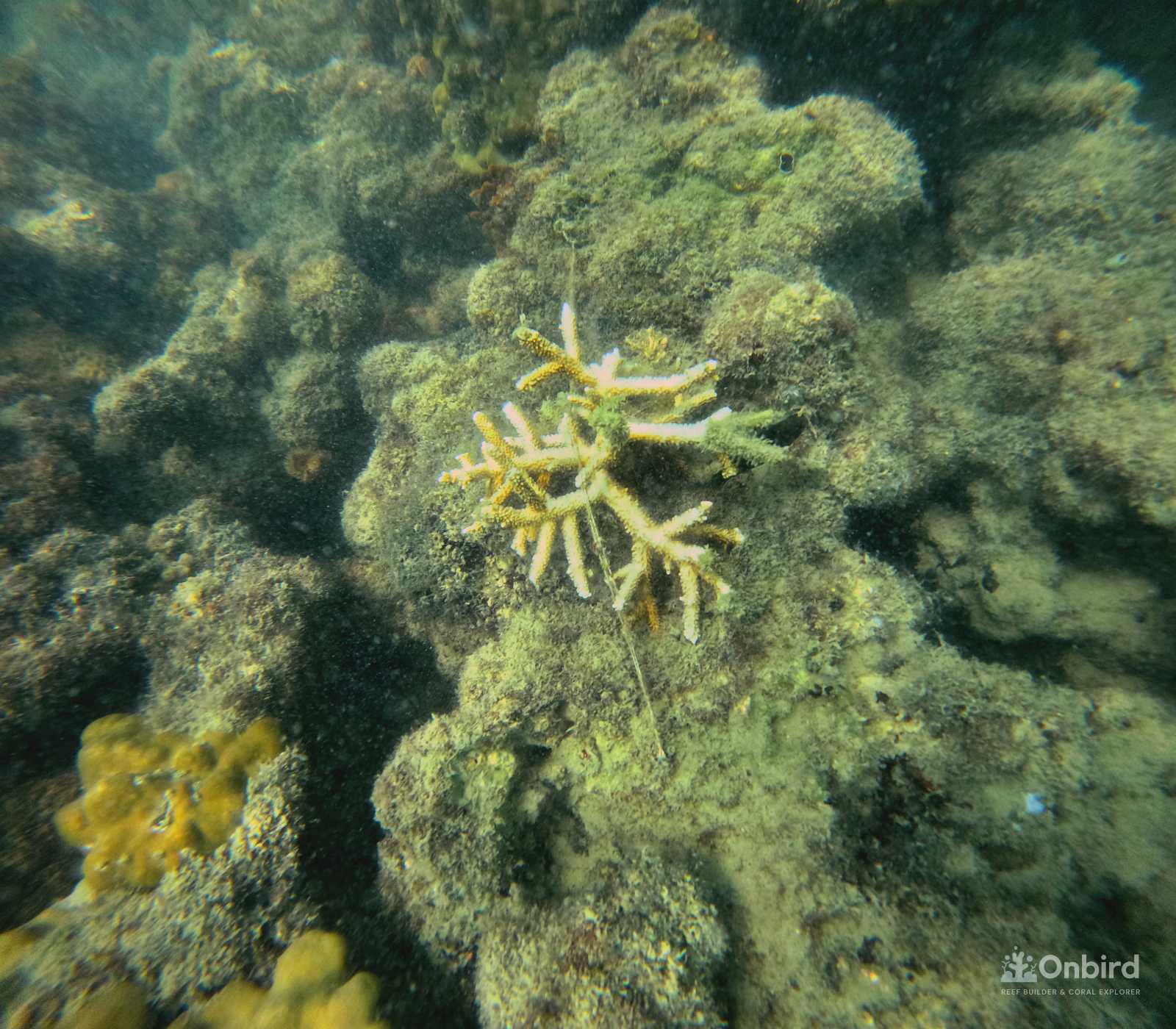
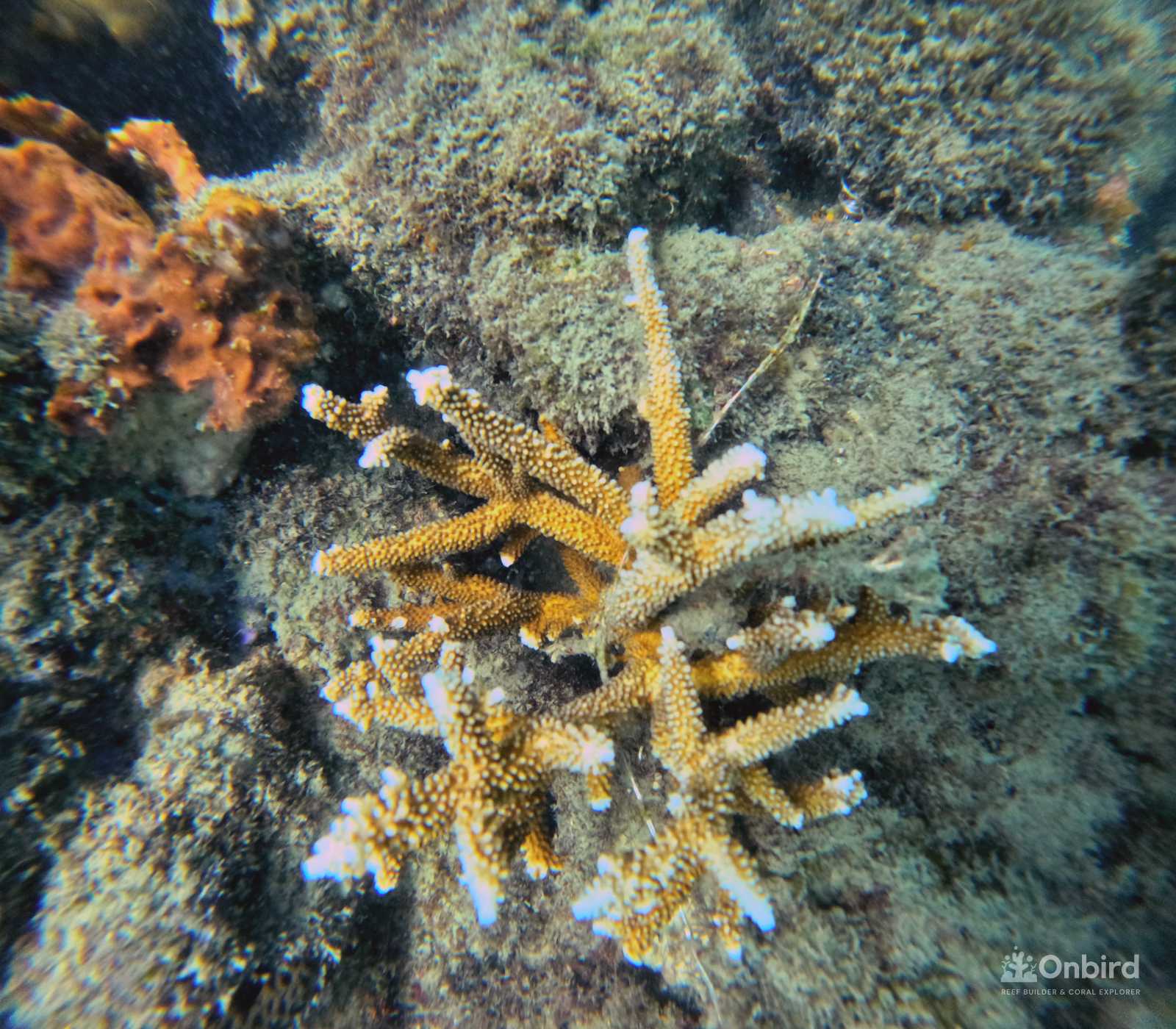
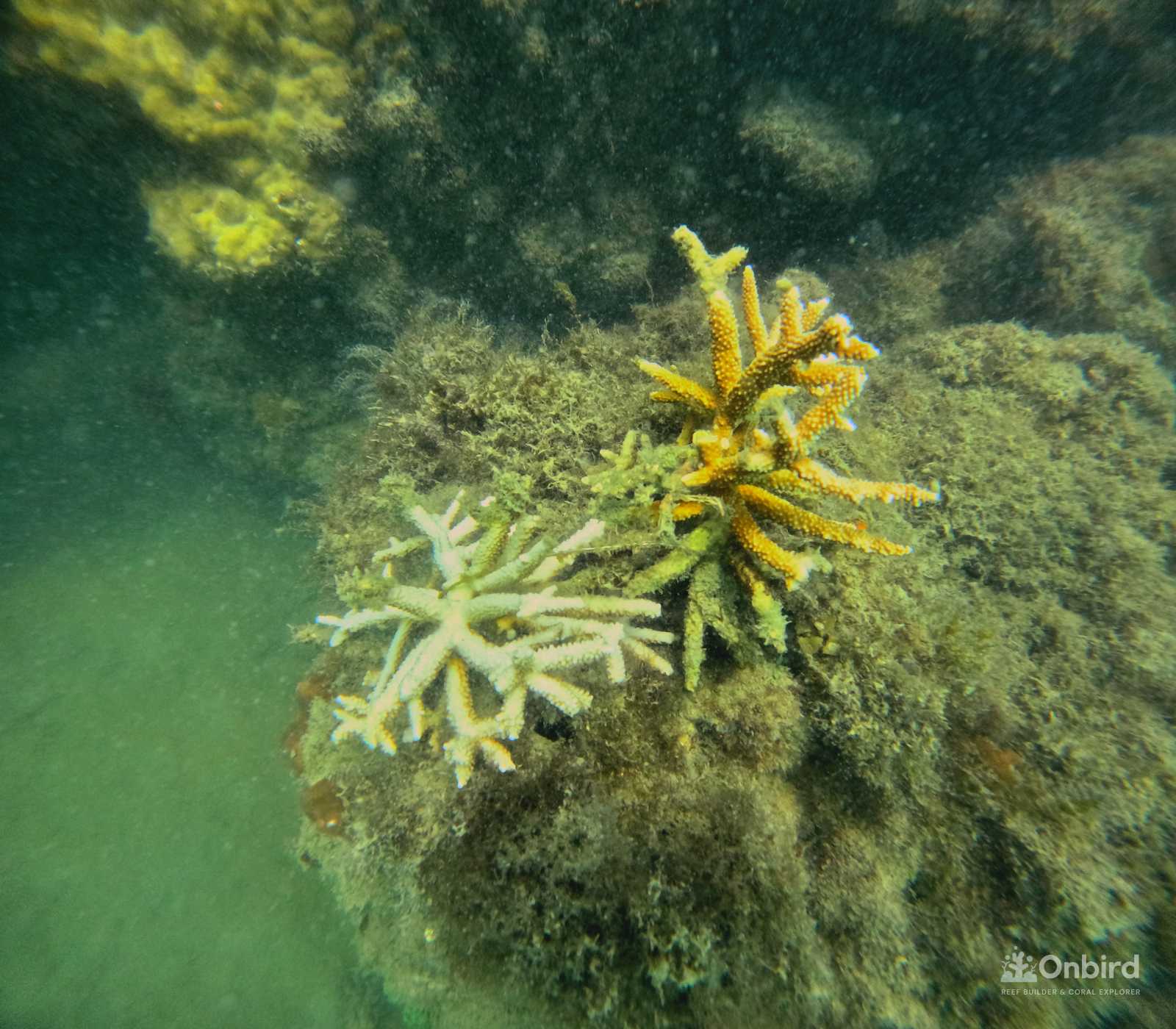
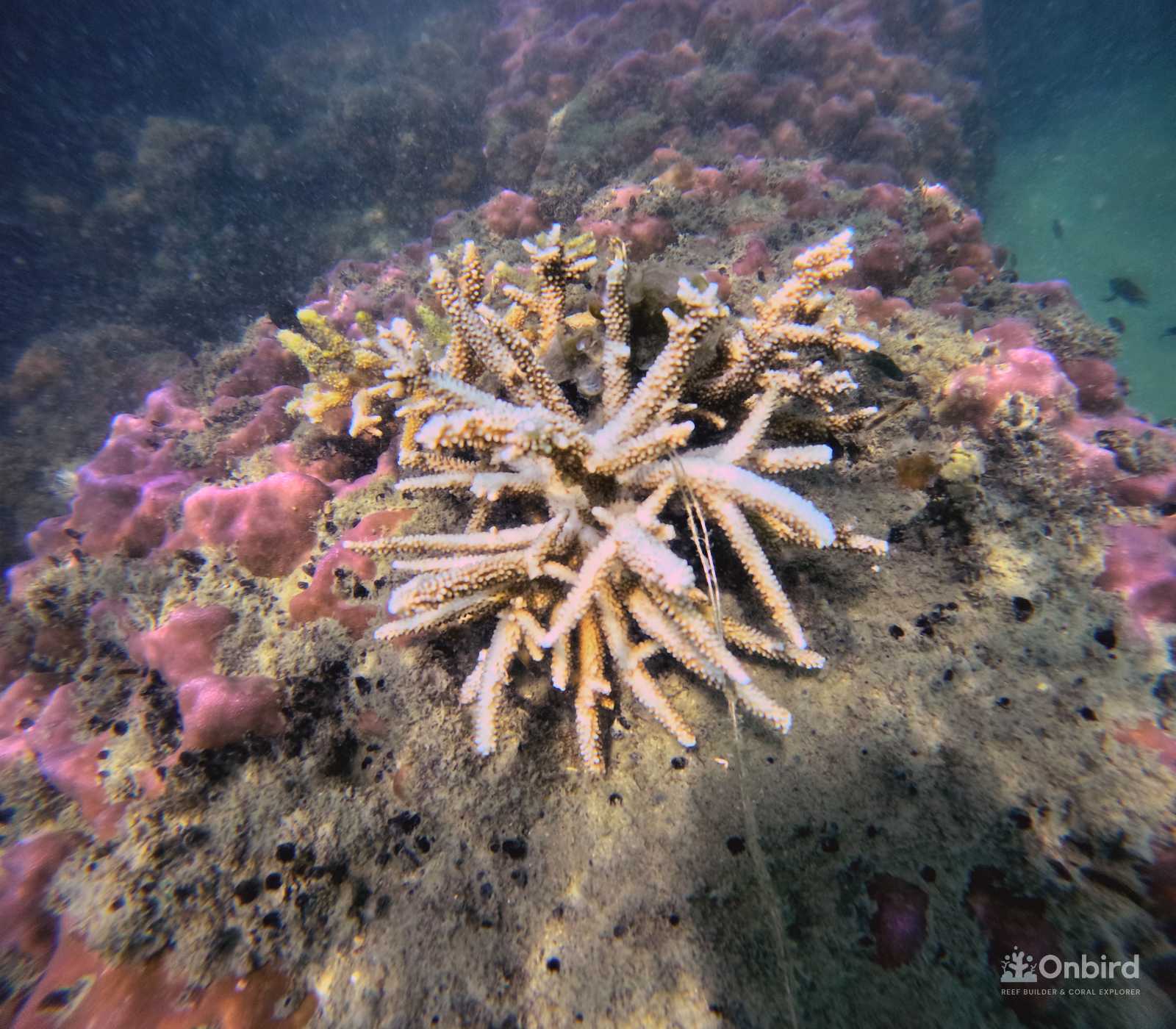
Observations recorded during the second campaign showed that coral fragments transplanted in October 2025 had grown noticeably larger compared to their original size. Preliminary monitoring after approximately seven months recorded a survival rate of around 95%, indicating successful attachment and early growth on the transplantation substrates.
Phase 3 – Expansion of Coral Restoration Across Four Southern Reefs (April 2026)
In April 2026, OnBird Phu Quoc launched the first large-scale expansion phase of its coral restoration program across four fringing reefs in South Phu Quoc, using coral colonies that had been cultivated for one year in the South Island coral nursery.
Campaign Scale
| Category | Scale |
|---|---|
| Implementation period | 8 days |
| Number of reefs in Phase 1 | 4 southern reefs |
| Number of coral fragments/clusters transplanted | 600+ |
| Transplantation depth | 1–4 meters |
The Four Selected Reefs
The restoration sites — Little Hill, North Little Hill, Sword Reef, and Turtlehead Reef — are shallow fringing reefs accessible during the summer season (April–October).
Among them, Sword Reef was identified as the most suitable location for restoration activities due to its environmental conditions: depths ranging from 0.5–4 meters, wide sandy terraces, and abundant natural substrates consisting of dead coral skeletons. These conditions provide sufficient attachment surfaces for transplanted corals without introducing artificial materials into the marine environment.
Three Coral Species Used in This Phase
Acropora pulchra (Staghorn Coral)
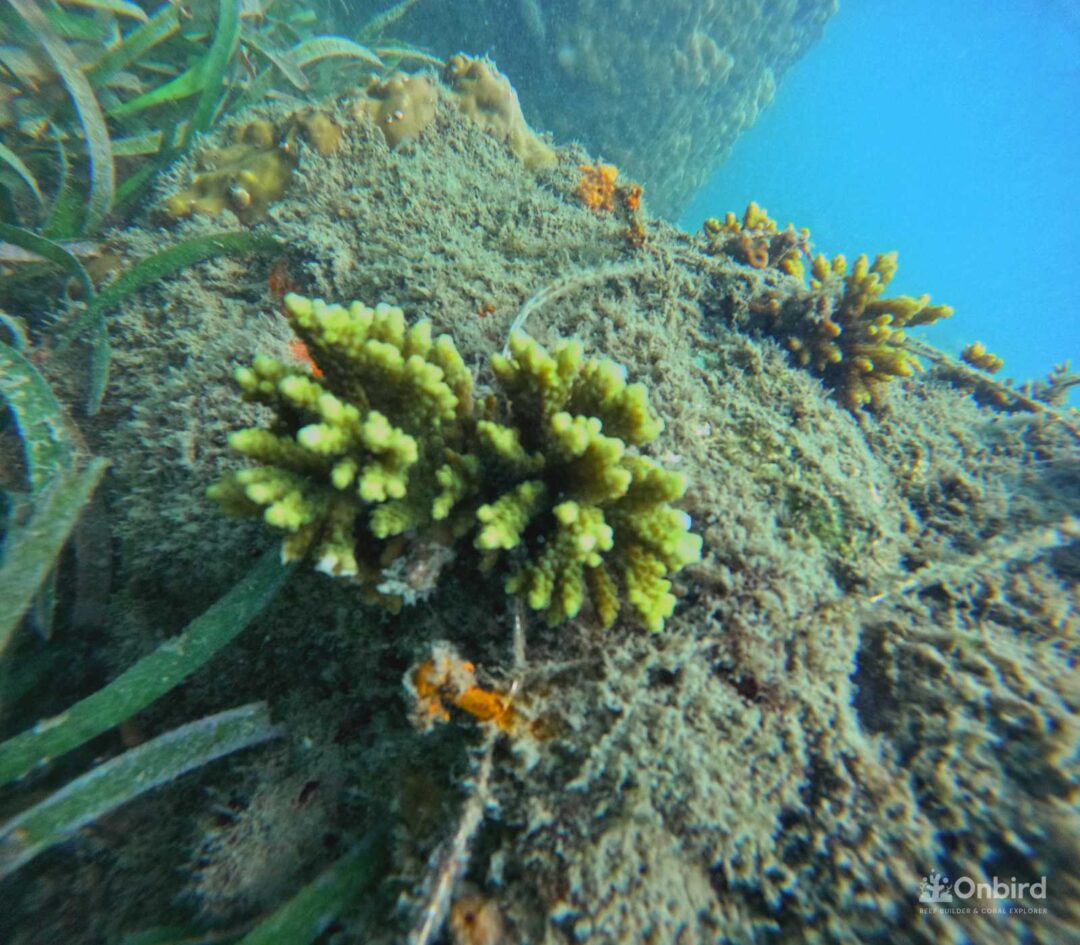
This was the primary species used during the campaign. Colonies had been cultivated for one year in the South Island nursery before transplantation, reaching sizes of approximately 15–30 cm per year under nursery conditions. Field observations indicate growth rates between 15–40 cm per year depending on water conditions.
Its branching structure creates numerous shelters and microhabitats for juvenile fish and reef organisms.
Porites cylindrica (Finger Coral)
This species survived the 2024 bleaching event with recorded growth rates of up to 5 cm per year. Field observations suggest that Porites cylindrica demonstrates higher tolerance to the newly elevated seawater temperature thresholds, making it one of the priority species for propagation within OnBird’s restoration strategy.
Acropora rosaria (Cherry Blossom Coral)
Also introduced during the first restoration phase, this species has recorded growth rates of approximately 10–12 cm per year. The population observed in Phu Quoc displays a distinctive emerald-green coloration, differing from colonies of the same species documented elsewhere in Southeast Asia.
Transplantation Methodology
Campaign Structure
- 95% large-fragment transplantation
- 5% micro-fragment transplantation
Substrates
Natural reef substrates were exclusively used, including dead Porites blocks and existing massive coral skeletons already present on the reef. No foreign construction materials were introduced into the marine environment.
Fixation Tools
- Metal nails for initial stabilization on hard substrates
- Galvanized wire to secure coral clusters temporarily, designed to corrode gradually over time
- Marine bioglue applied at contact points to assist coral attachment and root formation
Why the Restoration Was Launched in April 2026
Nursery Capacity
Coral colonies within the nursery had exceeded the carrying capacity of the suspended nursery rope system. Without timely fragmentation and transplantation, mother colonies would begin competing with one another for space and water flow, reducing overall growth efficiency.
Seasonal Conditions
Observations indicate that coral fragments transplanted during spring demonstrate growth rates approximately 1.2–1.3 times higher than those transplanted during autumn, making April one of the most favorable periods for restoration activities in Phu Quoc.