


Updated October 2026 | OnBird – Soft-Adventure Journeys
What if the best snorkeling experience in Phu Quoc wasn’t about visiting as many places as possible, but about taking the time to discover what most people swim past?
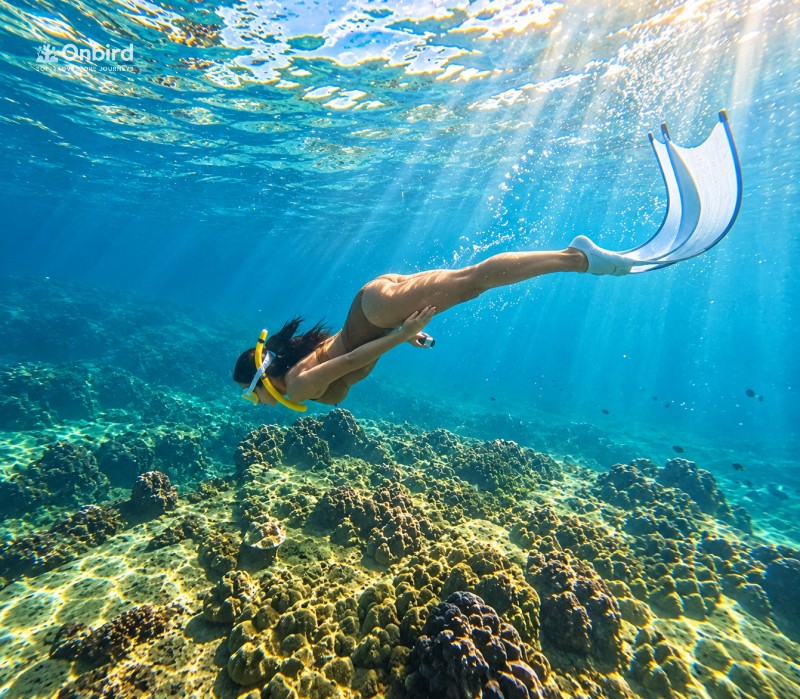
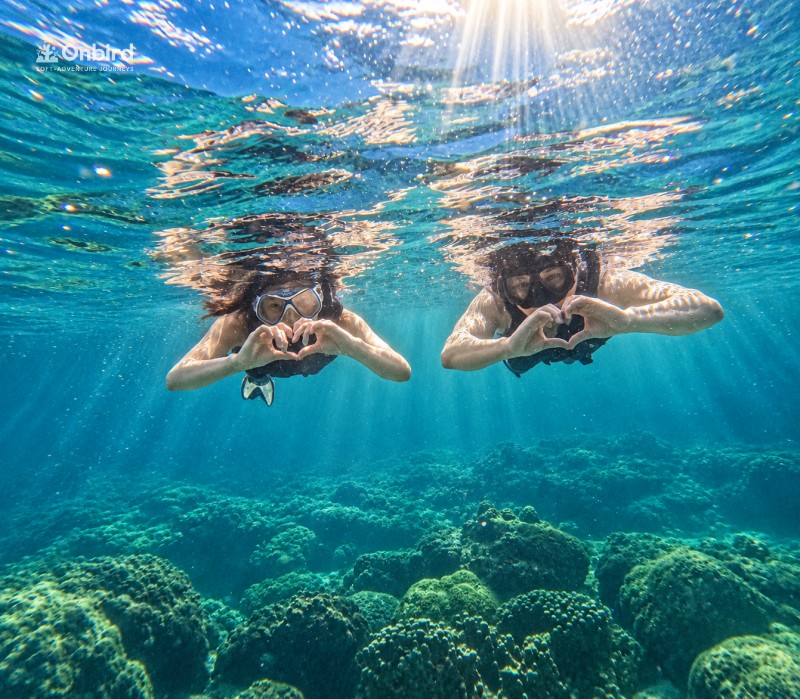
Phu Quoc Half-Moon Reef is an underwater destination for curious explorers who enjoy taking their time. Beneath the clear surface, rocky coral formations, clusters of sea anemones, clownfish, sea slugs and occasional jellyfish encounters create opportunities to observe marine life at a slower pace.
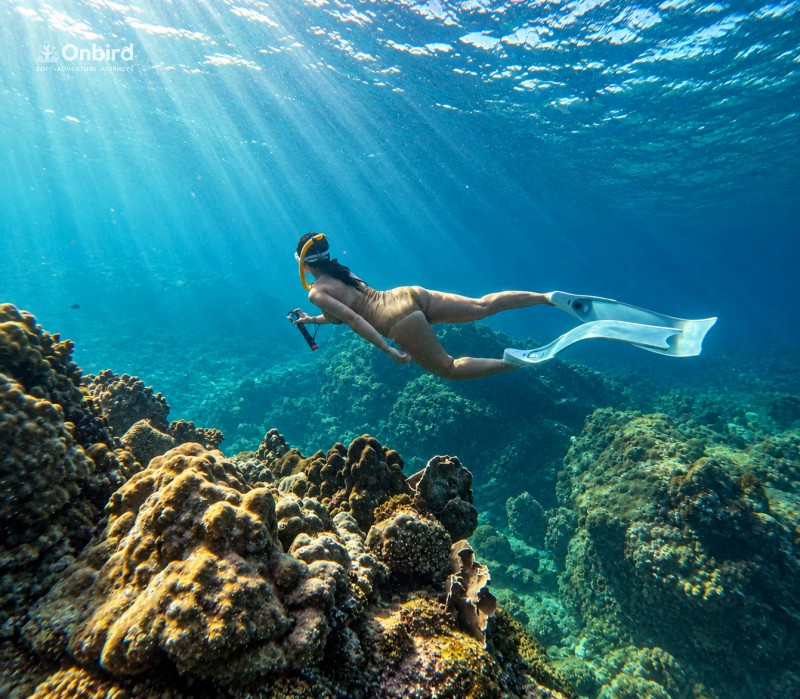
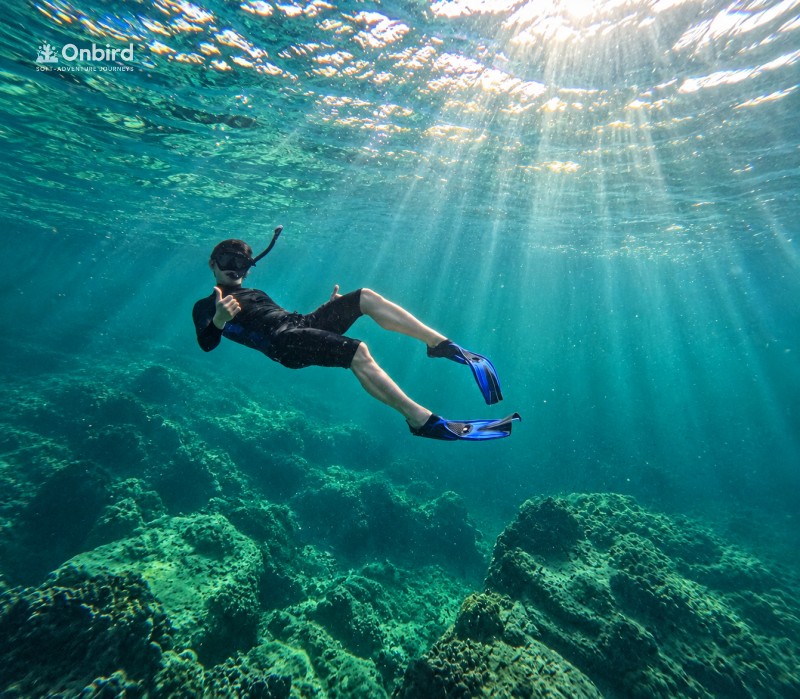
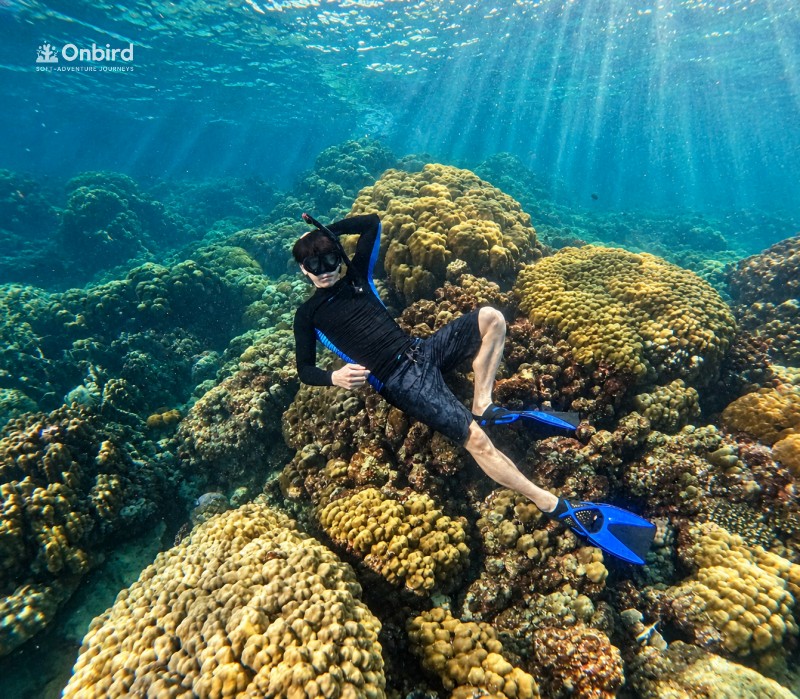
For confident swimmers and freediving enthusiasts, the reef also offers a different kind of underwater exploration. With an appropriate route, long fins can be used in deeper or more open sections while minimizing the risk of accidentally striking shallow corals.
At OnBird, we believe that meaningful marine encounters need time. Our snorkeling experiences are designed to give guests extended time in the water, including on shared-group trips, so they can explore at a more relaxed pace rather than feeling rushed from one stop to the next.
MAIN CONTENTS
- 1. Half-Moon Reef: A Place to Explore, Not Just Swim Through
- 2. Freediving at Half-Moon Reef: More Freedom, With the Right Route
- 3. Jellyfish Encounters: An Unexpected Underwater Moment
- 4. Sea Anemones and Clownfish: Small Details Worth Taking Your Time For
- 5. Sea Slugs: Discovering the Smaller Side of the Reef
- 6. Why More Time Underwater Changes the Experience
- 7. Is Half-Moon Reef Right for You?
- 8. How to Explore Half-Moon Reef Responsibly
- Frequently Asked Questions
- Take Your Time. Discover More Beneath the Surface.
1. Half-Moon Reef: A Place to Explore, Not Just Swim Through
Located in southern Phu Quoc, within the An Thoi archipelago, Half-Moon Reef is known for its rocky underwater terrain, coral formations and varied depths.
OnBird’s historical documentation describes a reef with depths ranging approximately from 0.5 to 10 metres. Its underwater landscape includes coral-covered rocks, shallow reef structures and deeper sections that create different opportunities for snorkeling and freediving.
But the appeal of Half-Moon Reef is not simply its topography.
It is the possibility of slowing down, looking closer and noticing the details: the movement of anemone tentacles, a clownfish emerging from its shelter, a tiny sea slug resting on a reef surface, or sunlight illuminating a coral-covered formation.
This is the kind of experience that rewards patience and curiosity.
2. Freediving at Half-Moon Reef: More Freedom, With the Right Route
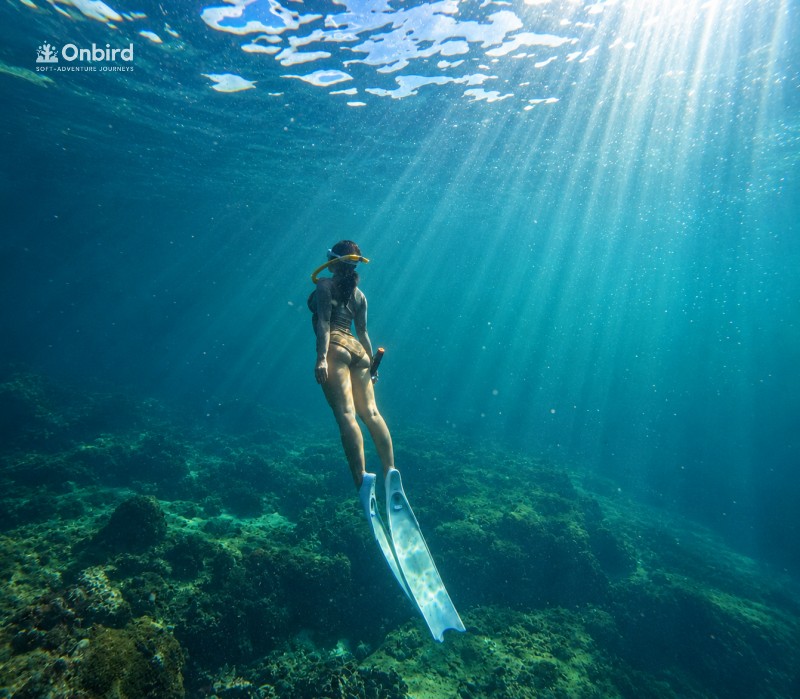
Half-Moon Reef can appeal to confident swimmers and freediving enthusiasts who enjoy moving through the water with long fins.
However, long fins require space. In shallow coral gardens, an uncontrolled fin kick can strike fragile coral structures, even when the swimmer has no intention of touching the reef.
For this reason, the route matters as much as the equipment.
An experienced guide can help identify sections with sufficient depth and clearance for suitable finning techniques, while selecting shallower areas for careful surface observation where appropriate.
The objective is not to dive deeper at every opportunity. It is to move comfortably, maintain control and explore without damaging the underwater environment.
Is Half-Moon Reef suitable for long-fin freediving?
It may be suitable for experienced swimmers and trained freedivers when the route and conditions allow. Suitability depends on the individual, current, visibility, depth and the amount of space available above the reef.
Visitors should never assume that every shallow section is appropriate for long fins. Freediving should follow appropriate training and safe buddy procedures, and should never be undertaken alone.
3. Jellyfish Encounters: An Unexpected Underwater Moment
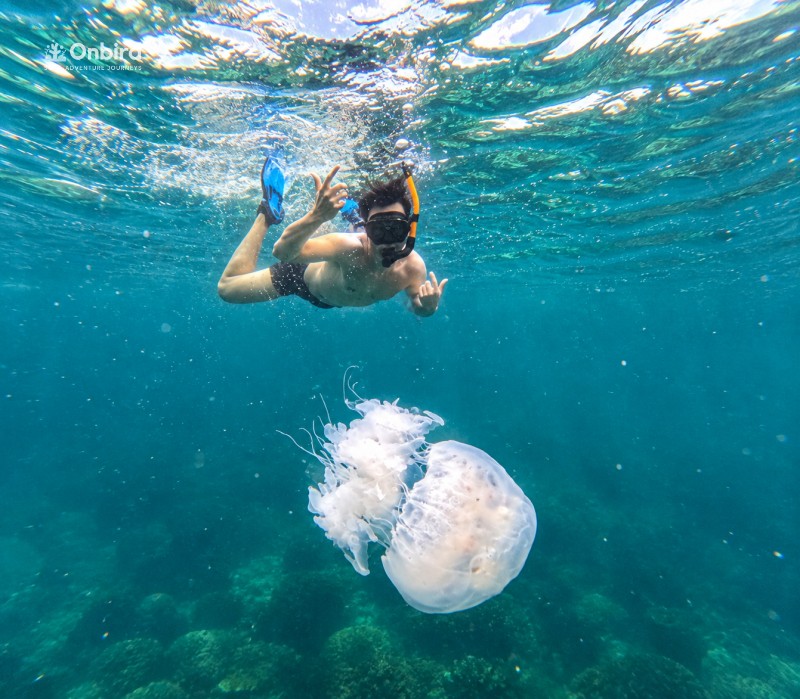
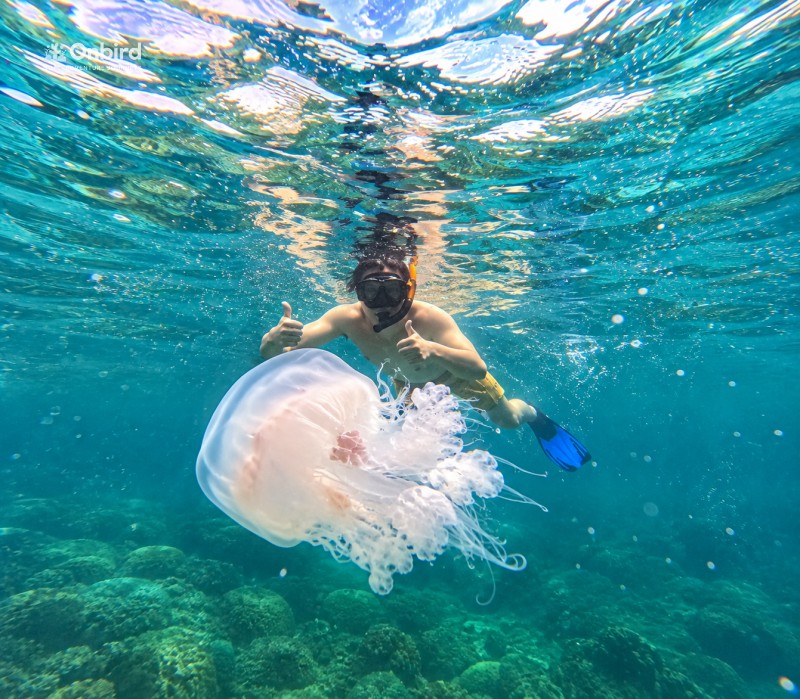
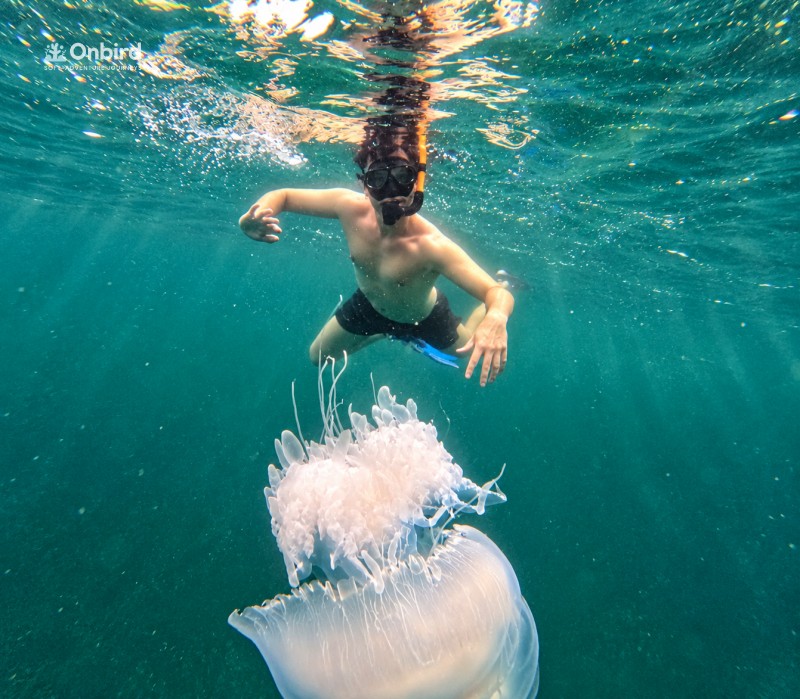
One of the most memorable encounters guests may experience at Half-Moon Reef is swimming near a jellyfish.
With its translucent body and delicate trailing tentacles, a jellyfish can transform an ordinary snorkeling moment into an extraordinary photographic opportunity.
Yet jellyfish encounters are natural and unpredictable. Their presence depends on environmental conditions, and they cannot be guaranteed on every trip.
When one appears, the best approach is to observe calmly, maintain a respectful distance and avoid touching it. Some jellyfish can sting, even when they appear delicate or harmless.
For underwater photographers, these encounters offer an opportunity to capture the contrast between a translucent animal, blue-green water and the sunlight filtering through the surface.
4. Sea Anemones and Clownfish: Small Details Worth Taking Your Time For
Some of the most rewarding underwater encounters are found close to the reef rather than in the open water.
Sea anemone clusters create textured, moving landscapes across the reef. Their tentacles sway with the water, while clownfish may be seen sheltering among them.
These small habitats reward patient observation. Instead of swimming quickly past a coral formation, visitors can take a moment to notice the movement, colours and interactions taking place within it.
Anemones and clownfish are particularly appealing subjects for underwater photography because they offer a sense of scale and character within the larger reef environment.
The best observations happen without disturbing the animals. Keep hands and fins clear of the reef, avoid chasing fish and allow wildlife to behave naturally.
![[PHOTO 4 — Anemone garden and clownfish]](https://onbird.vn/wp-content/uploads/2026/10/Rạn-san-hô-rực-rỡ-dưới-làn-nước-trong-veo.jpg)
5. Sea Slugs: Discovering the Smaller Side of the Reef
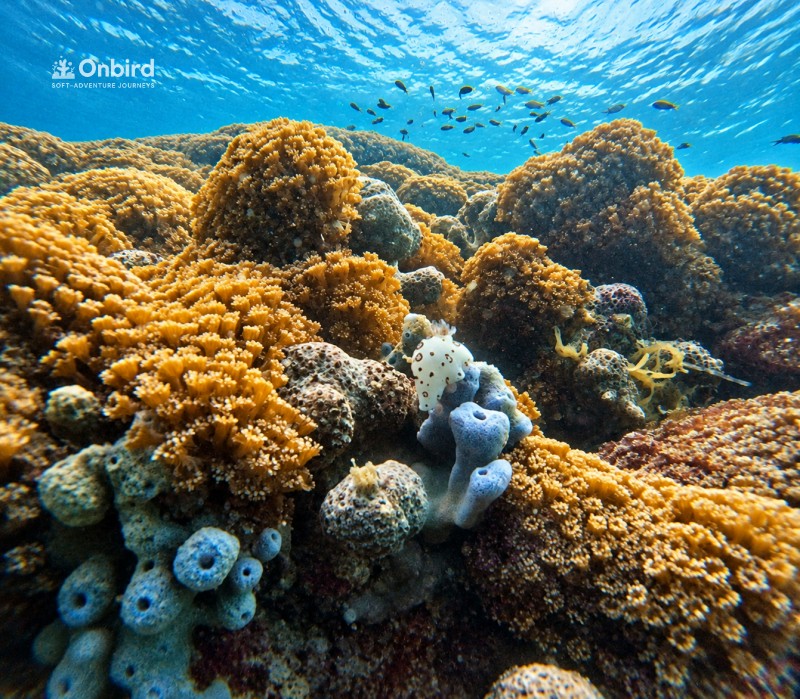
For guests who enjoy looking closely, sea slugs can be among the most fascinating subjects to discover underwater.
Many sea slugs are small and easily overlooked. Their colours, patterns and shapes can make them surprisingly photogenic, but spotting them depends on the species present, the conditions and the observer’s ability to notice small details.
This is where a slower itinerary becomes valuable.
With sufficient time and an observant guide, guests can look beyond the large coral formations and pay attention to the smaller organisms that contribute to the reef’s diversity.
Sea slugs should never be handled or moved for a photograph. Their location, identification and behaviour should be recorded carefully if they are featured in educational content.
6. Why More Time Underwater Changes the Experience
Many travellers think of snorkeling as a short activity between boat transfers and other attractions. But an underwater environment can reveal much more when visitors have time to settle into the experience.
A longer session allows guests to become more comfortable in the water, observe different sections of the reef and spend additional time appreciating coral formations and marine life.
It also allows the pace of exploration to feel less hurried.
At OnBird, extended time underwater is a core part of our approach to snorkeling. Our commitment is to offer the longest underwater experience on the island, including on shared-group trips, rather than treating snorkeling as a brief stop on a packed itinerary.
This is a service commitment, not a claim that every trip will have identical timing. Actual underwater duration depends on sea conditions, safety considerations, group ability and the itinerary available on the day.
For travellers who value observation, photography and a more immersive encounter with nature, time in the water can be just as important as the number of places visited.
7. Is Half-Moon Reef Right for You?
Half-Moon Reef may be a good choice if you enjoy:
- Spending longer periods exploring underwater rather than rushing between stops.
- Observing coral formations and small marine organisms.
- Taking underwater photographs.
- Freediving or snorkeling with an appropriate level of experience.
- Learning about marine habitats from a knowledgeable guide.
- Experiencing nature without disturbing it.
It may be less suitable for someone expecting guaranteed sightings of a particular animal or someone uncomfortable in open water.
Beginners should discuss their swimming ability with the operator and choose an itinerary with appropriate supervision and flotation support. Advanced freediving requires suitable training, safe buddy procedures, and a route appropriate to the diver’s abilities.
8. How to Explore Half-Moon Reef Responsibly
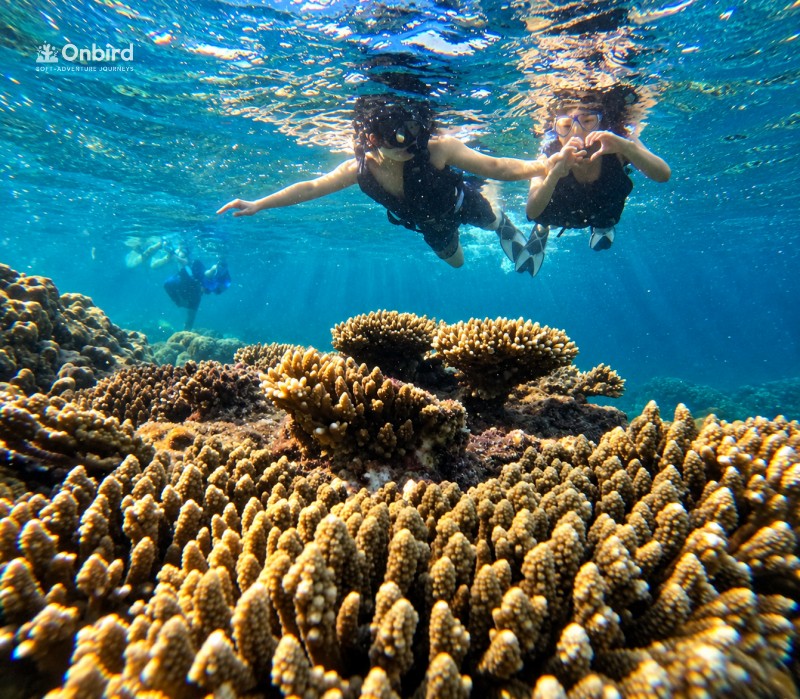
Half-Moon Reef is a living underwater environment, not simply a backdrop for photographs.
A few simple habits help protect the reef:
- Keep fins away from shallow corals.
- Never stand on, touch, or collect coral.
- Do not touch or chase jellyfish, clownfish, sea slugs or other marine life.
- Avoid stirring up sediment above coral formations.
- Follow your guide’s route and safety instructions.
- Use responsible buoyancy and swimming techniques.
The best underwater photograph is one that captures a natural encounter without disturbing it.
Safe and Sustainable Snorkeling Experience at OnBird Phu Quoc: Where Science Meets Practice
Frequently Asked Questions
Where is Half-Moon Reef in Phu Quoc?
Half-Moon Reef is in southern Phu Quoc, within the An Thoi archipelago. OnBird’s historical documentation places it approximately 16 km south of An Thoi town.
Can you see jellyfish at Half-Moon Reef?
Jellyfish have appeared in guest photographs from the reef, but sightings are unpredictable. Their presence cannot be guaranteed on a particular trip.
Are there clownfish and sea anemones at Half-Moon Reef?
OnBird’s historical observations describe anemone habitats, and the reef is explored for its variety of marine life. Current sightings should be confirmed by recent field observations.
Is Half-Moon Reef suitable for freediving with long fins?
It can be suitable for experienced swimmers and trained freedivers when the route provides adequate depth and clearance. Shallow coral areas require particular care because long fins can accidentally strike fragile reef structures.
What makes OnBird’s snorkeling experience different?
OnBird focuses on extended underwater exploration, giving guests more time to observe the reef and its marine life. The company positions its trips around a commitment to the longest underwater experience on the island, including shared-group tours. Actual duration remains subject to conditions and safety.
What is the best way to explore Half-Moon Reef?
Choose an itinerary that matches your swimming ability and interests, follow your guide’s instructions, and allow enough time to observe the underwater environment without rushing.
Take Your Time. Discover More Beneath the Surface.
Half-Moon Reef is for travellers who want more than a quick look at the ocean.
From the movement of sea anemones and the possibility of a jellyfish encounter to the smaller details of sea slugs and coral formations, this is a place where patience can make the experience more rewarding.
Explore thoughtfully, move responsibly and give yourself time to discover the underwater world.
Explore Phu Quoc with OnBird – Soft-Adventure Journeys.
Discover OnBird’s snorkeling experiences in Phu Quoc