


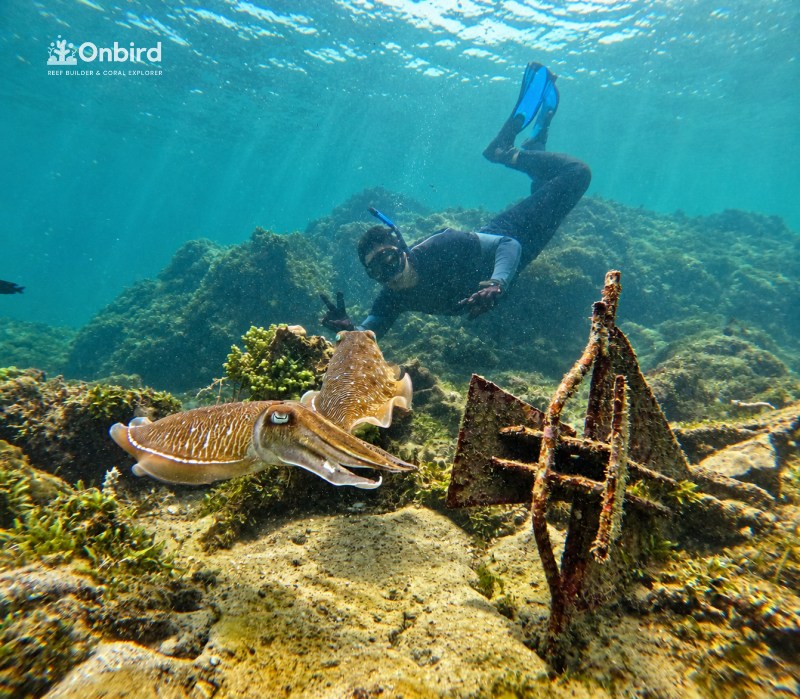
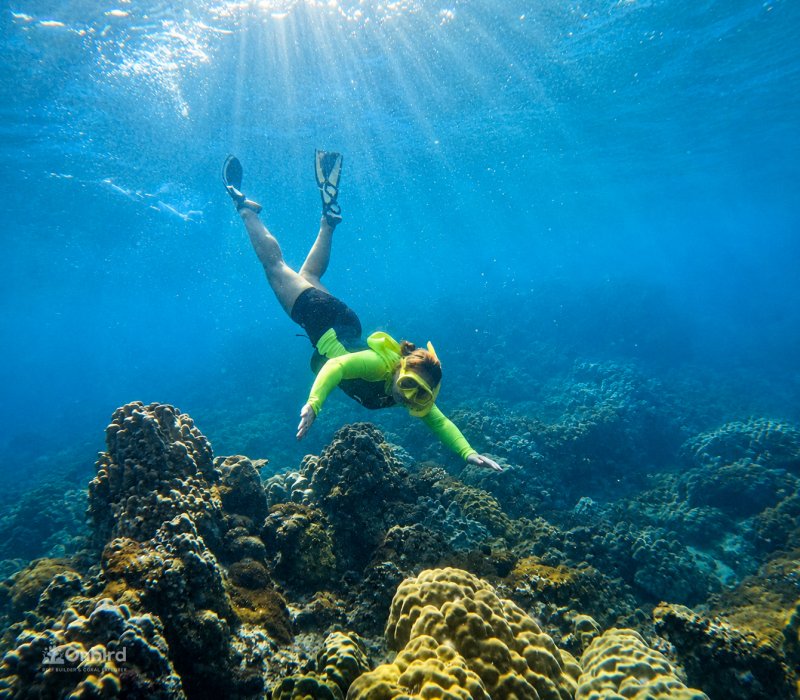
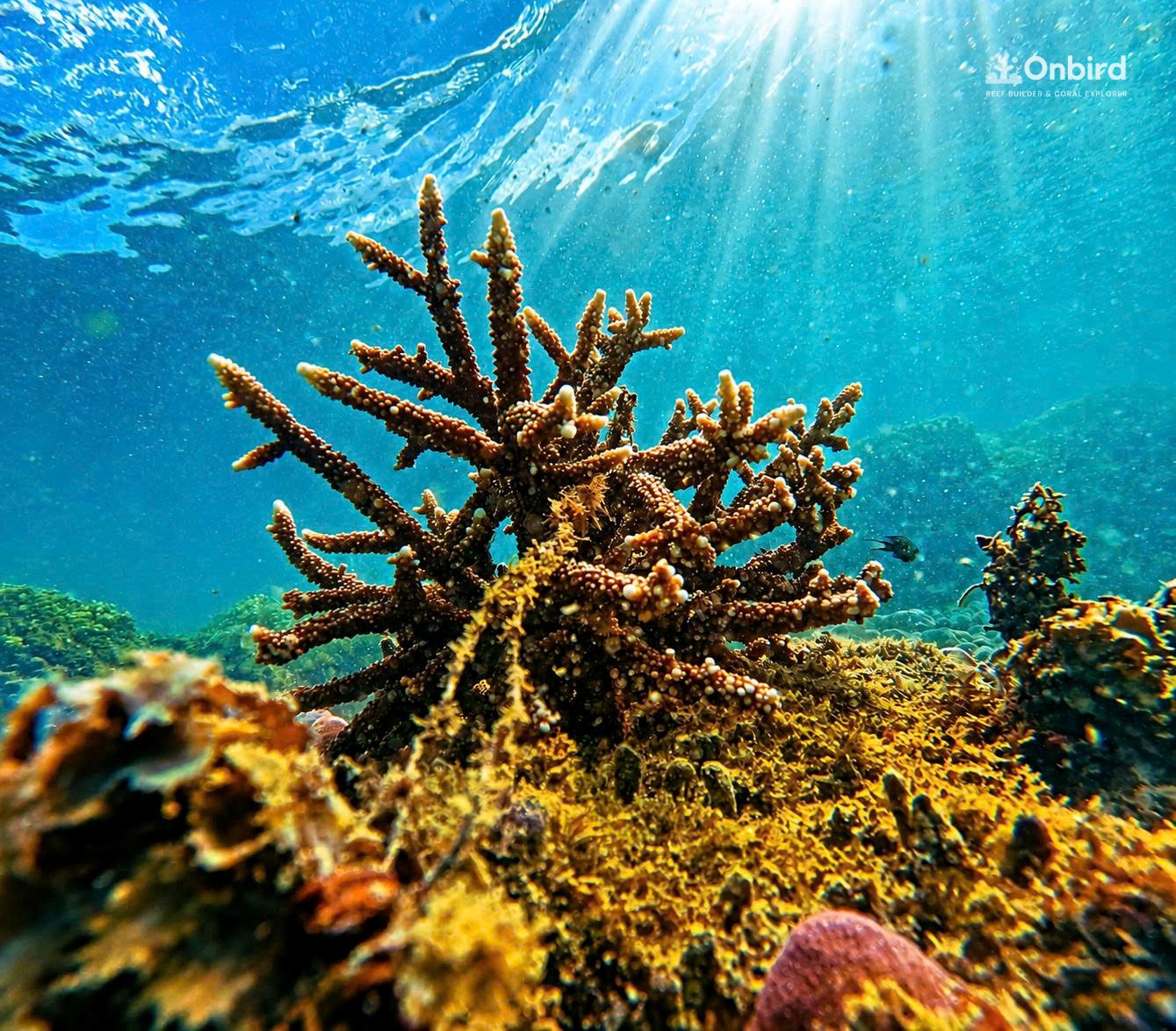
Just beneath the surface of Phu Quoc’s southern coastline lies Sword Reef, a shallow fringing coral reef where the underwater world begins only metres from shore.
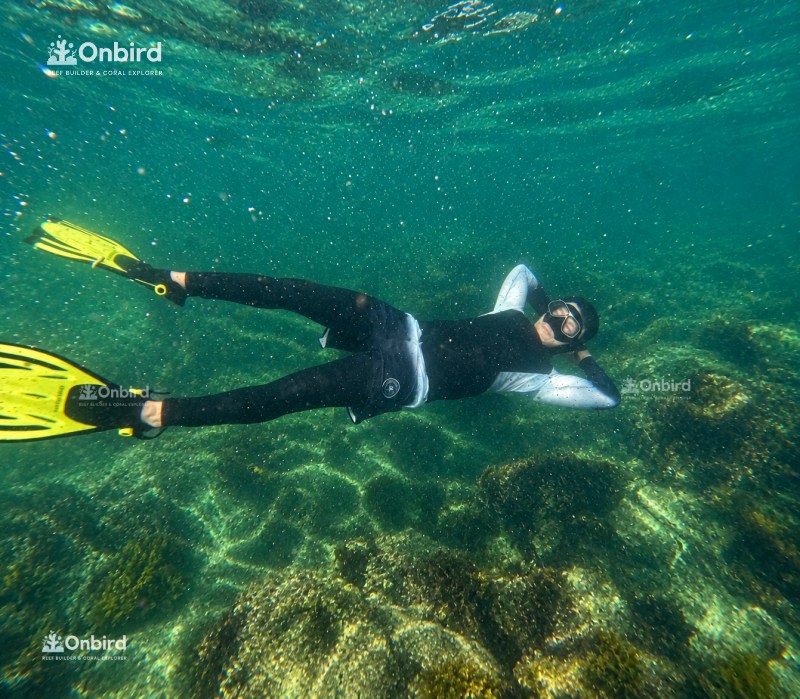
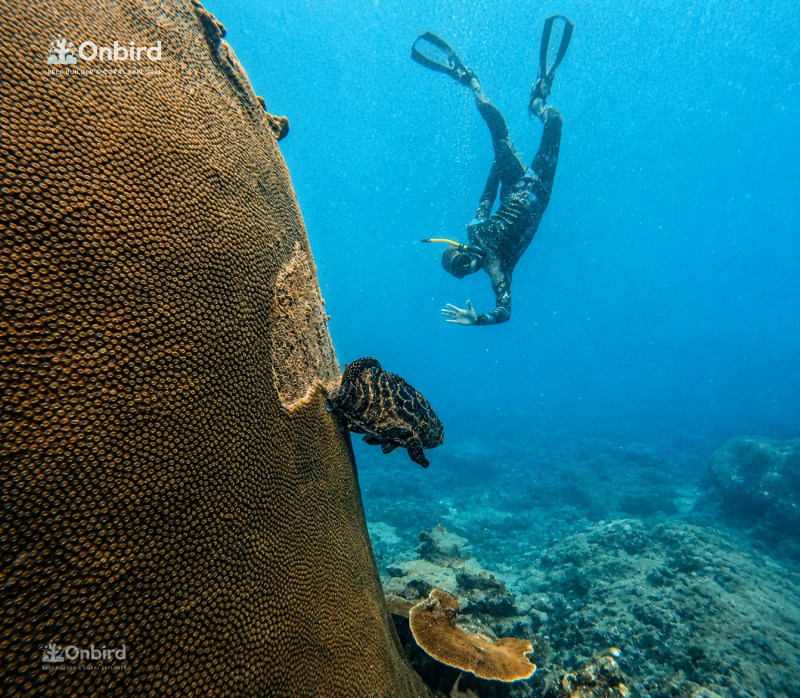
With coral growing at depths of roughly 0.5 to 6 metres, Sword Reef offers a different kind of snorkeling experience. You do not need to dive deep to see the reef. In the shallow water, natural light reaches the coral easily, marine life is close to the surface, and the underwater landscape changes every few metres.
The name “Sword Reef” was given by the OnBird team to describe this distinctive stretch of coastline. It is not marked on public charts. In April 2026, our field team spent 15 days planting more than 300 coral fragments across Sword Reef and three neighbouring reefs as part of our ongoing coral restoration work.
But numbers only tell part of the story.
The other part is what it feels like to put your face in the water and find a living reef just below you.
MAIN CONTENTS
Sword Reef at a glance
| Location | Southern coastline of Phu Quoc, Vietnam |
| Reef type | Fringing coral reef |
| Depth | Approximately 0.5–6 metres |
| Typical visibility | Around 5–8 metres during clearer periods* |
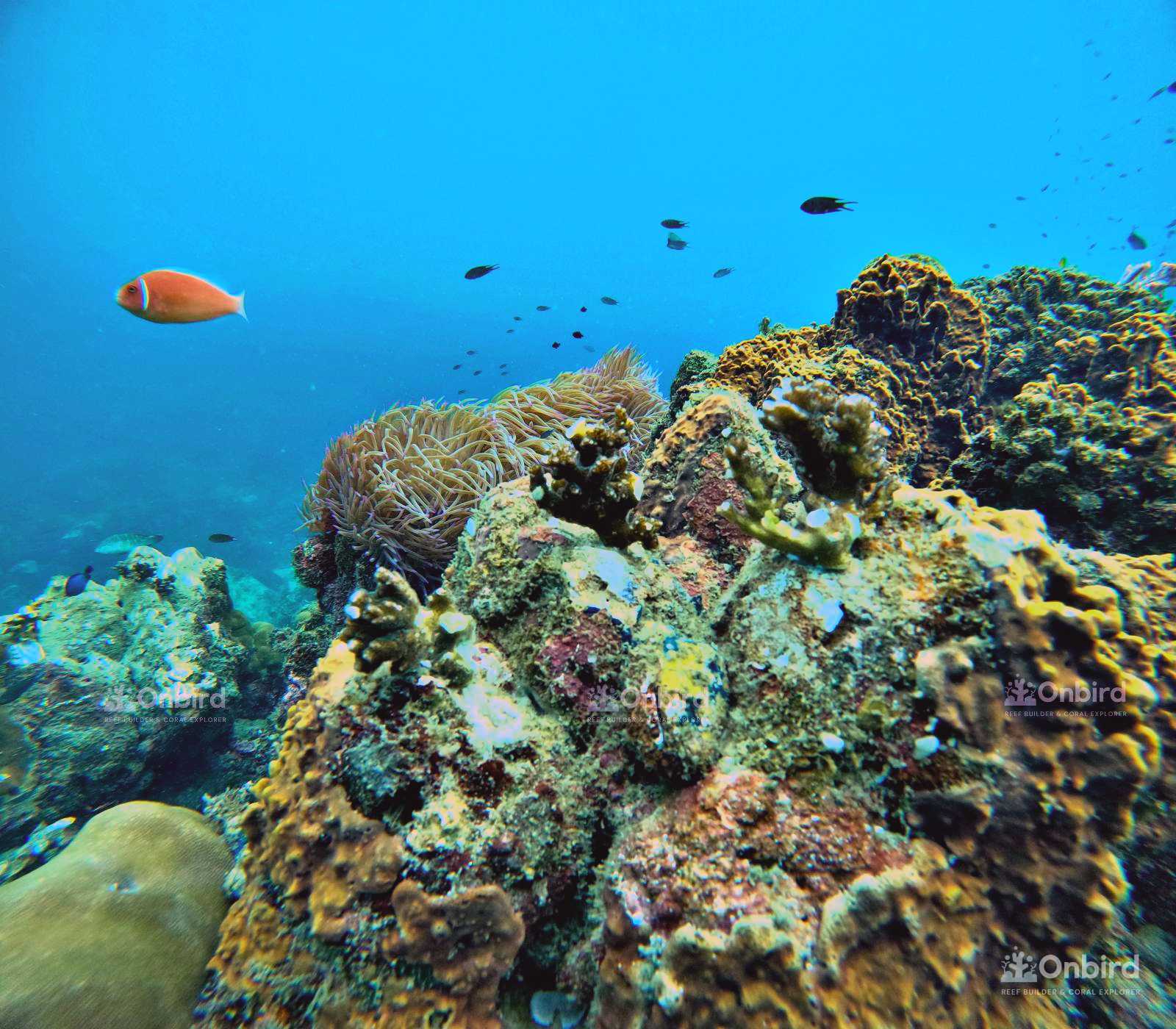
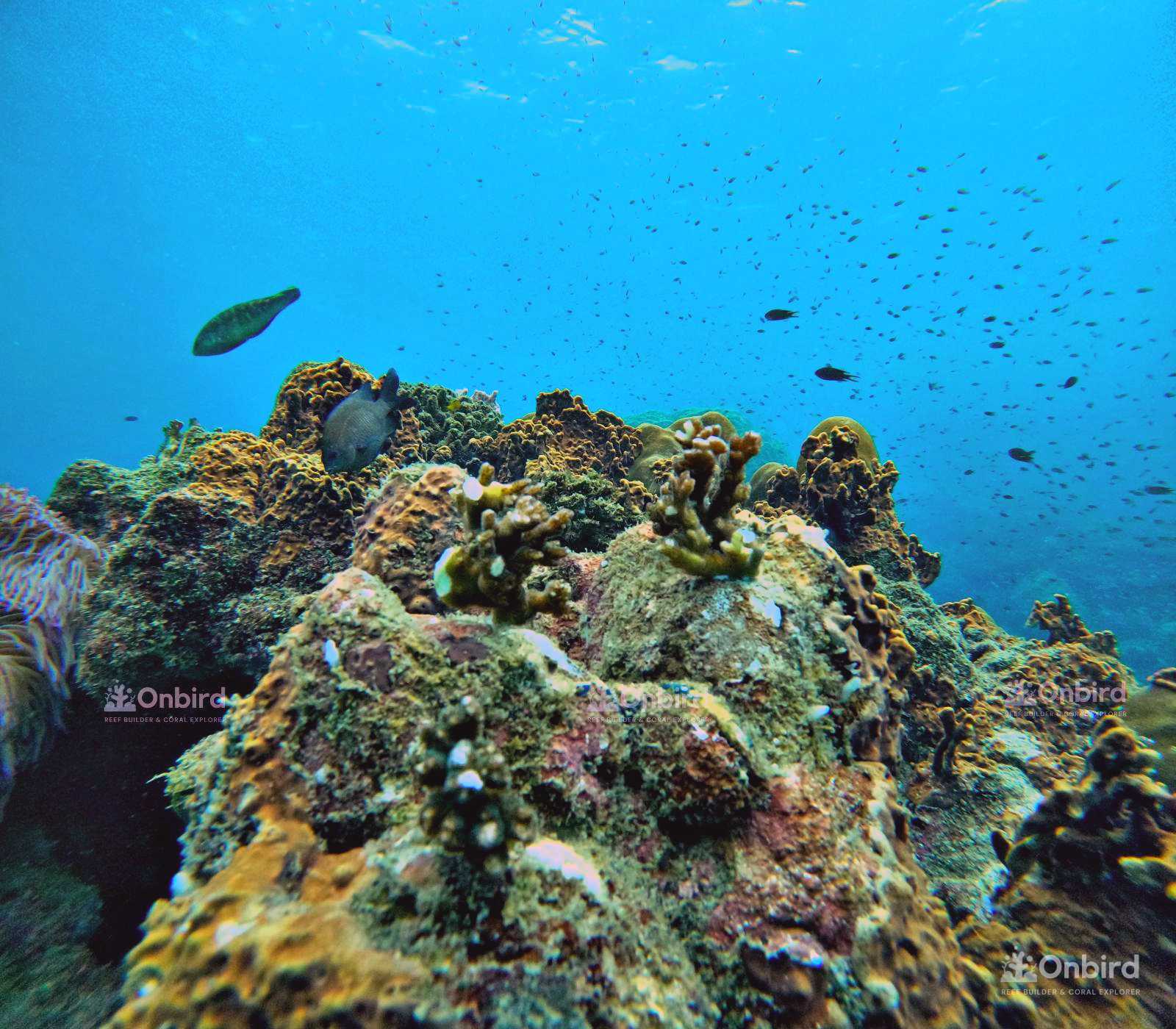
| Marine life | Hard and soft corals, sea fans, black coral, reef fish, nudibranchs, cuttlefish, starfish, sea worms and occasionally sea snakes |
| Best suited for | Beginners, non-swimmers with flotation support, families and experienced snorkelers |
| Access | Selected OnBird southern snorkeling routes |
| Conservation | Part of OnBird’s ongoing coral restoration work |
*Based on OnBird’s field observations described in this article. Actual conditions vary by day.
What can you see at Sword Reef?
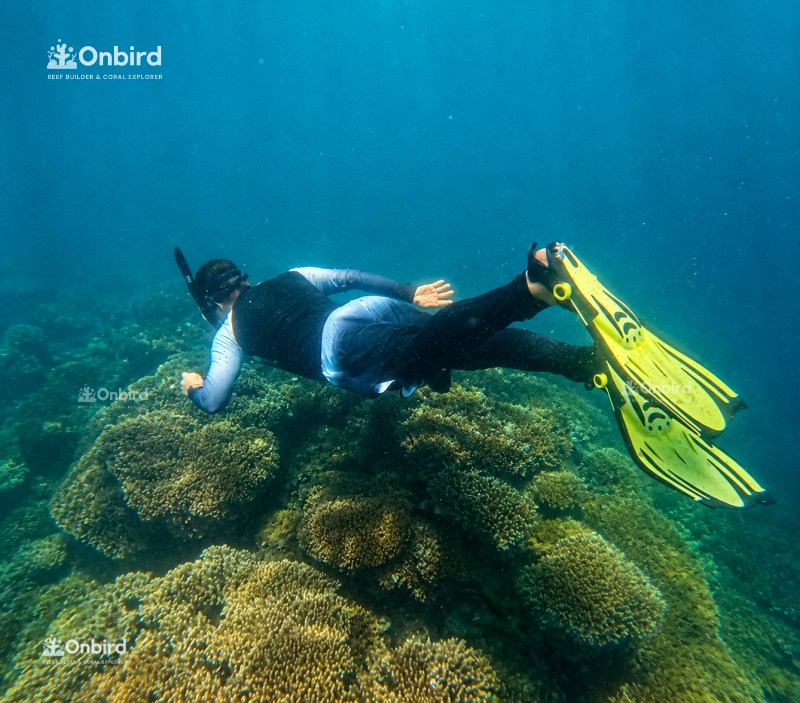
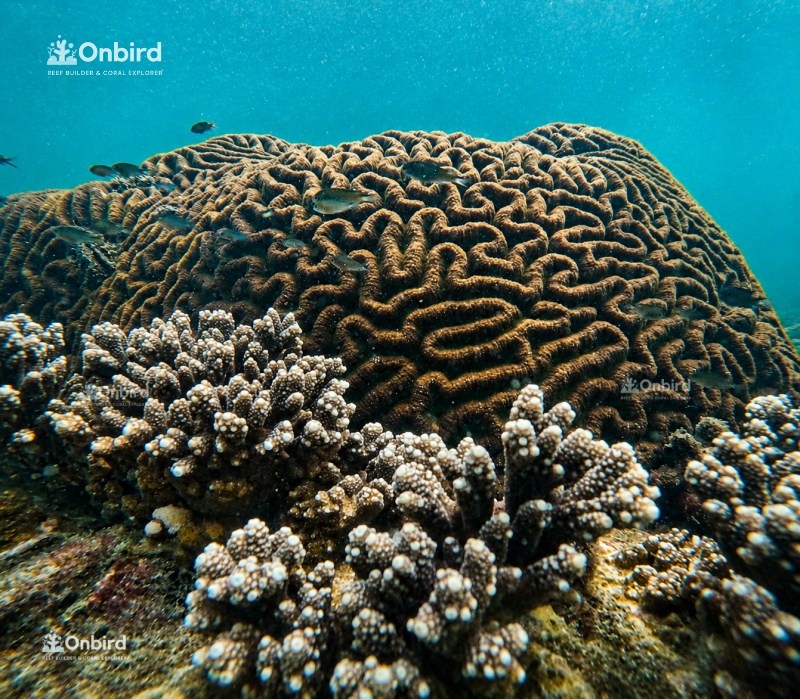
At the corner where the reef meets a channel, the current runs strong and carries nutrients through. That corner is the richest part of the site: dense clusters of red and white sea fans standing in the flow, black corals beneath them, and live coral cover of around eighty percent. On a reef that came through what Phu Quoc’s reefs went through in 2024, that figure means something. Sword Reef is one of the healthier reefs we know in southern Phu Quoc, and it is one of the reasons we keep coming back.
Beyond the hard and soft corals, this August and September brought an unusual run of encounters.
Cuttlefish
In late August and early September this year, during a calm morning with approximately 4-6 metres of visibility, a group of guests watched a cuttlefish hold position in open water and change colour in front of them.
It became one of the encounters guests asked about most.
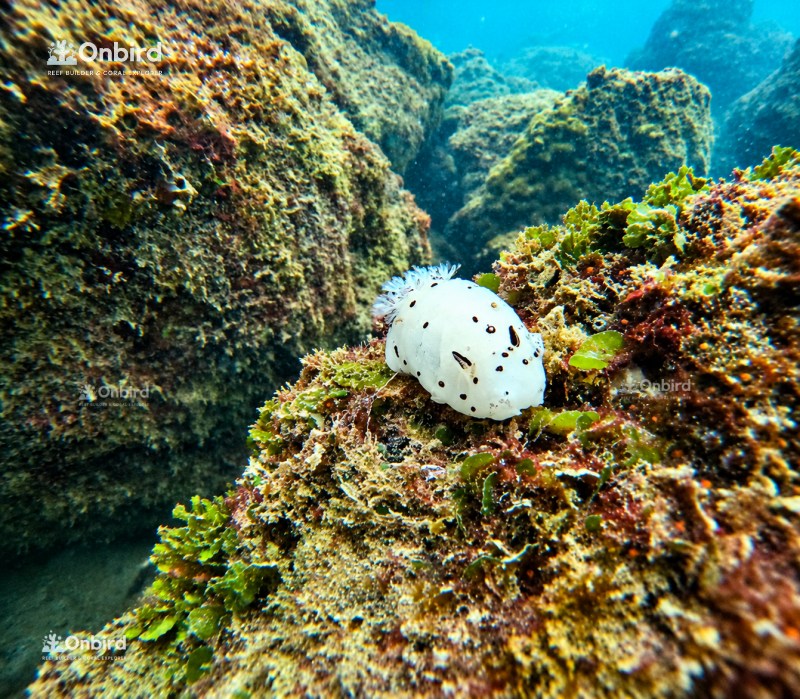
Spotted white nudibranch.
Small, slow and remarkably decorated, nudibranchs can be easy to miss.They move along the reef floor, which is why our guides often point them out. Once you notice one, you start looking differently at the reef.
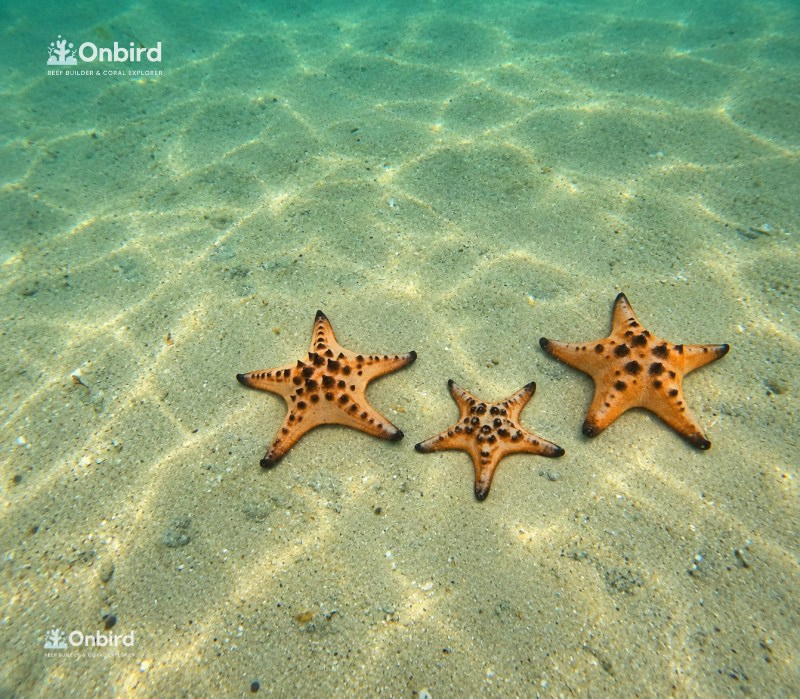
Starfish
Starfish can be found resting on sandy patches between coral heads, often in water shallow enough to observe them easily from the surface.
Sea snakes
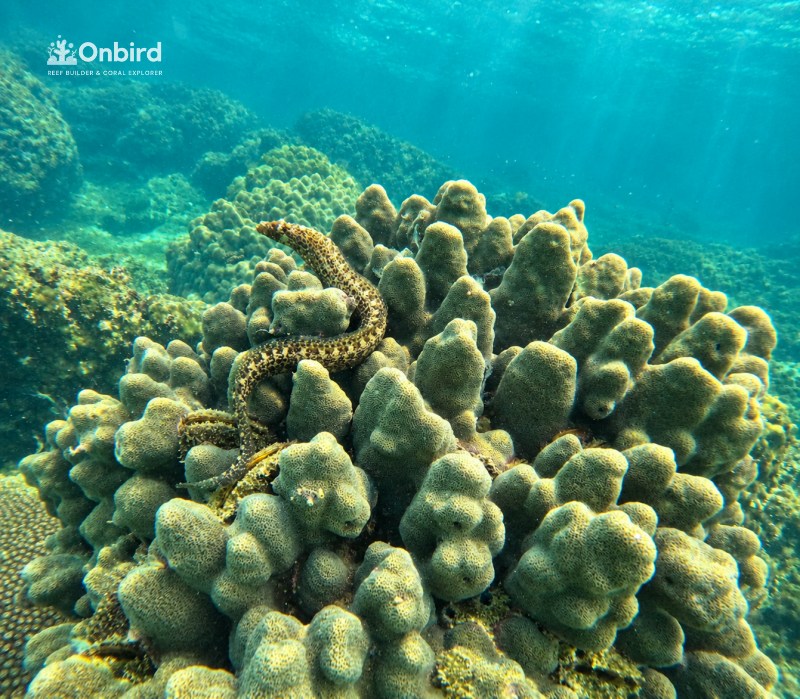
Sea snakes are occasional visitors to the reef. They are shy and generally keep their distance. When one is encountered, our guides explain what guests are seeing and maintain a comfortable viewing distance. The best response is simple: float, watch and let the animal continue on its way.
Sea worms
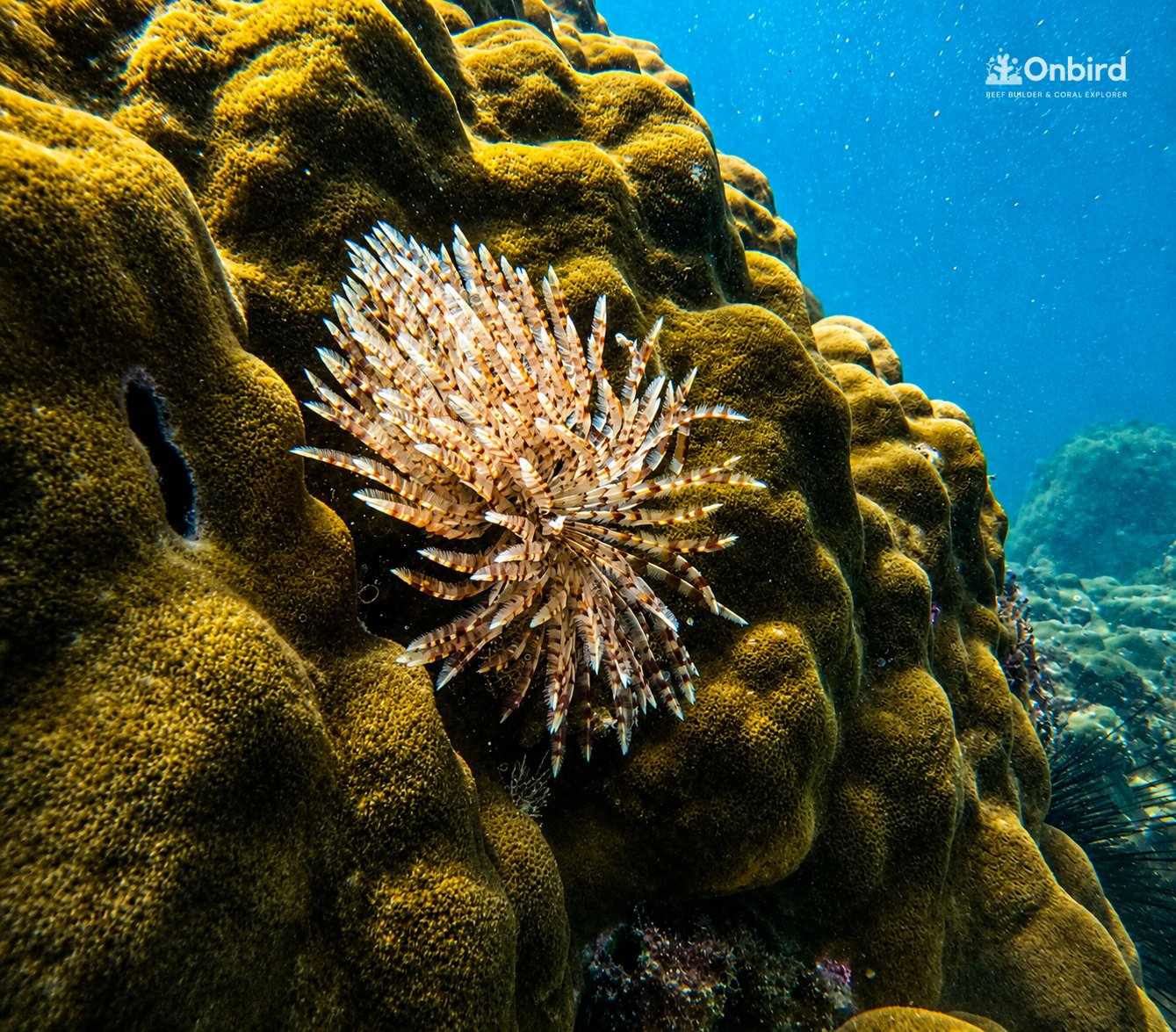
Look closely and you may notice fan-shaped feeding crowns emerging from the reef. When a shadow passes, they can disappear almost instantly. Watching one slowly reopen is a small lesson in patience.
Corals, sea fans and black coral
The reef also contains hard and soft corals, including areas with dense red and white sea fans and black coral.
At one section where the reef meets a channel, stronger currents carry nutrients through the area. OnBird’s field observations have recorded live coral cover of around 80% in this section.
That makes this one of the healthier reef areas our team works with in southern Phu Quoc.
Do you need to be a strong swimmer to snorkel at Sword Reef?
No.
This is one of the questions we hear most often.
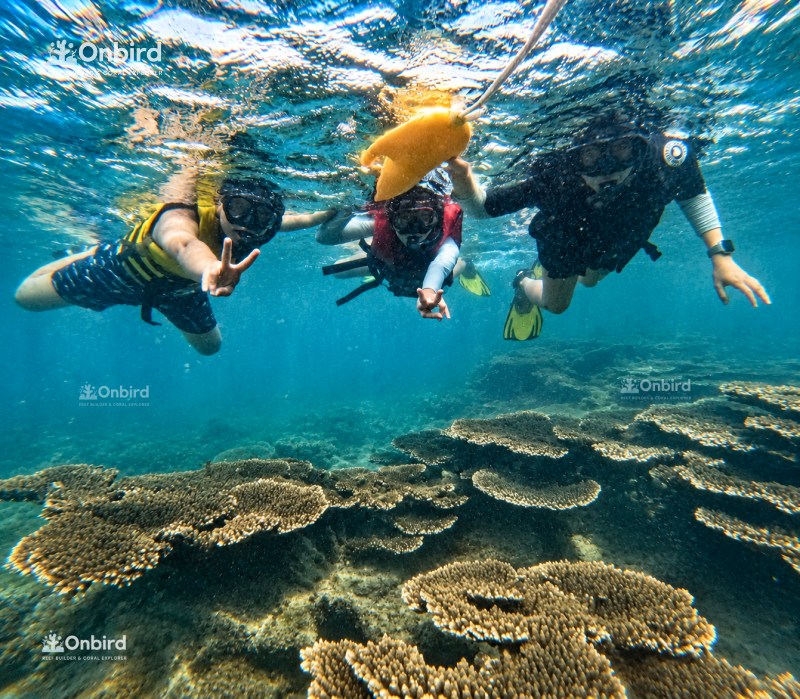
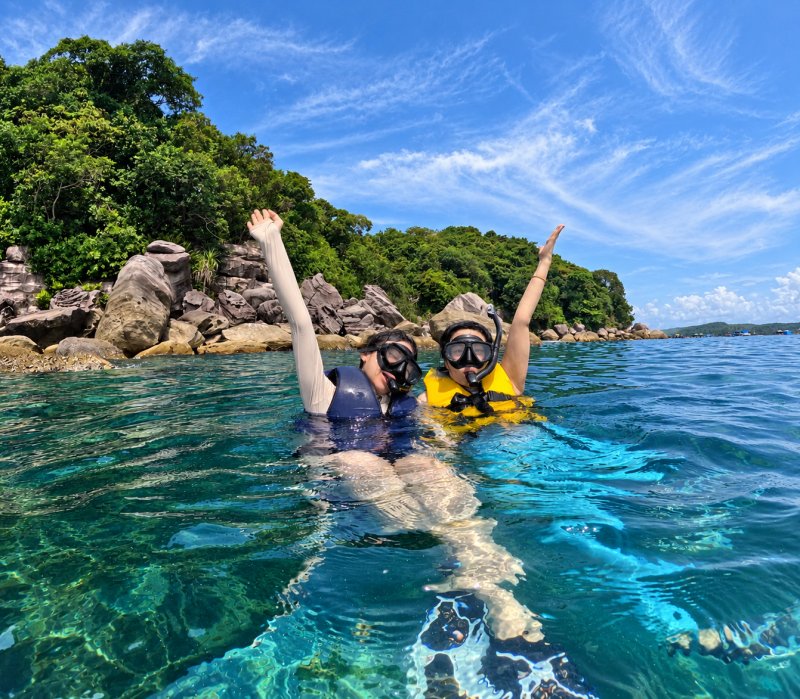
Our groups include people who cannot swim, first-time snorkelers, children, parents in their sixties and experienced divers. They can all enter the same water because the experience is structured around close guidance and appropriate flotation support.
Non-swimmers receive flotation support and a guide who stays within arm’s reach.
More confident snorkelers can explore further while our guides point out interesting sections of the reef.
The shallow reef also helps. At Sword Reef, a nervous first-timer and an experienced swimmer can observe much of the same underwater world without needing to descend into deep water.
What makes OnBird’s snorkeling different?
Low guest-to-guide ratio.
Our guides are in the water with guests rather than supervising only from the boat. This allows the experience to adapt to different swimming abilities and interests within the same group.
Why is OnBird planting coral at Sword Reef if the reef is healthy?
A healthy reef still needs attention. In 2024, prolonged water temperatures above 32°C contributed to significant coral loss across Phu Quoc. Sword Reef came through better than many other areas, but selected shallow zones still lost part of the branching coral structure that provides shelter and habitat for juvenile fish.
That is why OnBird is restoring these areas rather than waiting for them to decline further. Our goal is not simply to increase coral cover, but to rebuild reef structure and diversity where they have been reduced.
OnBird’s Coral Restoration Work
Our restoration work began with a coral nursery established in April 2025, holding 14 coral genotypes across 11 reef-building species. In October 2025, we carried out our first transplanting project, placing more than 200 fragments across seven species at a northern Phu Quoc reef.
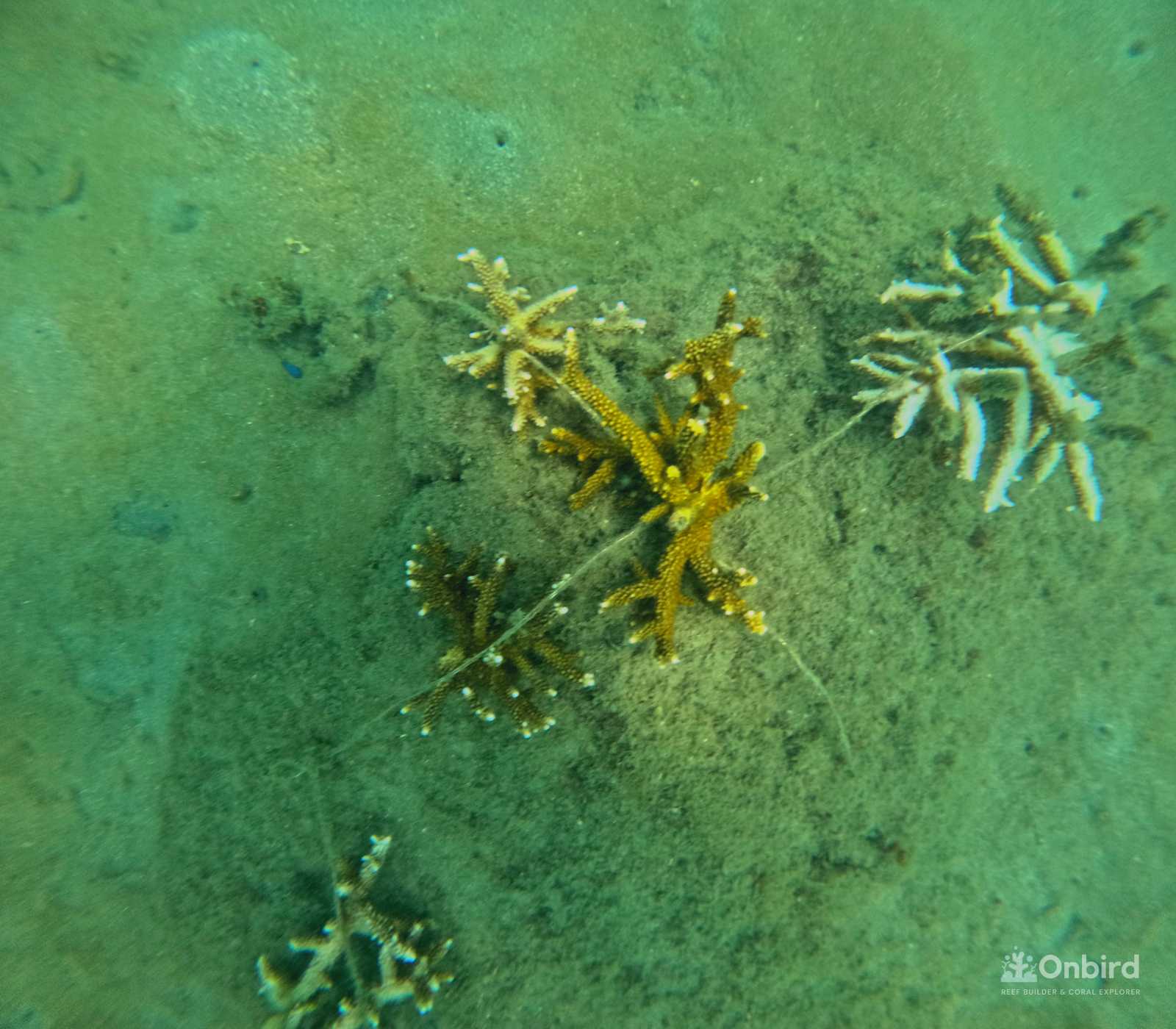
In April 2026, our field team spent 15 days restoring four southern fringing reefs, planting more than 300 coral fragments at depths of 1- 4 metres. Around 95% used the macro-fragment method, with species including Acropora pulchra, Acropora rosaria and Porites cylindrica. Together, these projects represent more than 500 coral colonies returned to the wild between 2025 and 2026.
Coral restoration is a long-term process, so we measure what happens after planting rather than promising results before they are there. Our current observations show that the April 2026 fragments have anchored, while growth rates vary between species and planting periods.
The project is funded through OnBird’s tour revenue: one dollar from every direct booking goes towards the Reef Regeneration Project, alongside contributions through our Supporters Wall.
How does OnBird choose the snorkeling reef each day?
Sword Reef is part of a wider southern Phu Quoc snorkeling route, and the exact reef visited depends on conditions that morning. Our team considers factors such as wind, waves, visibility and the condition of individual sites before deciding where guests are most likely to have the best experience.
This means the itinerary is not simply a fixed script. Different boats, different pace, same water — with the route adapted to the sea on the day.
How to visit Sword Reef with OnBird
Sword Reef may be included in selected OnBird snorkeling experiences in southern Phu Quoc, from reef-focused soft-adventure trips and small-group snorkeling to relaxed island excursions and yacht experiences.
Choose your experience based on the kind of day you want: a focused snorkeling trip, a slower island day, or a more private experience aboard a yacht.
- [JOIN-IN GROUP] Soft-Adventure Snorkeling to explore hidden coral spots in South Phu Quoc 5–6 hours, multi-level snorkeling, year-round.
- [SMALL-GROUP] Soft-Adventure Snorkeling in South Phu Quoc: same reefs, smaller group, lower guest-to-guide ratio.
Reef plus a slow afternoon:
- [SMALL-GROUP] Life-Style Excursion: Snorkeling & Relaxed Island & Seafood BBQ
- [Picnic – Snorkeling] Chillax Hideaway: Snorkeling & Sunset Island BBQ — October to May.
- [Group Island Hopping] Four Islands and Two Coral Reefs & Relaxing — year-round, gentlest option for mixed groups.
[Picnic – Snorkeling] Chillax Hideaway: Snorkeling & Sunset Island BBQ (Max 12 Pax)
By yacht:
- Corallia Yacht Excursion — reef and deck in equal measure, through the southern archipelago.
- Private charter aboard Monaco Parker for families and groups who would rather set their own schedule.
[Small-Group Yacht Excursion] Life-style South Phu Quoc Yacht Excursion: Corallia (Max. 14 Guests)
Not sure which trip is right for you? Tell us your travel dates, group size and swimming ability, and our team can recommend the most suitable experience based on the conditions and your expectations.
When is the best time to snorkel Sword Reef?
Sword Reef is at its clearest from roughly April to October, when visibility most often sits between five and eight metres. Calm mornings beat calm afternoons.
Our year-round soft-adventure routes run outside that window as well, because South Phu Quoc has enough sheltered coral spots that a grey sky rarely cancels a good day in the water.
Frequently asked questions
Where is Sword Reef in Phu Quoc?
Sword Reef is a fringing reef along the southern coastline of Phu Quoc Island, visited as part of OnBird’s southern snorkeling routes. The name was given by OnBird’s guides and is not marked on public charts.
Can I snorkel Sword Reef if I cannot swim?
Yes. Flotation support and a dedicated underwater guide are part of every trip. A significant share of our guests each season are non-swimmers.
How deep is Sword Reef?
Coral sits between roughly half a metre and six metres. Most of what you will look at is within the first three metres.
What marine life can you see at Sword Reef?
Hard and soft corals, red and white sea fans, black coral and reef fish, plus seasonal sightings of nudibranchs, cuttlefish, sea stars, sea worms and occasionally sea snakes. Nothing is guaranteed.
Is snorkeling at Sword Reef safe for children?
Yes. We size masks and flotation devices for children and brief every group before entering the water.
Why does OnBird plant coral at Sword Reef if the reef is healthy?
Sword Reef retained around eighty percent live coral cover after the 2024 bleaching event, but lost multi-layered branching structure in selected shallow zones. OnBird plants nursery-grown fragments in those zones to rebuild reef architecture and species diversity, not to rescue a dying reef.
Does my booking support coral restoration?
Yes. One dollar from every direct booking funds the Reef Regeneration Project, financed entirely from tour revenue.
Ready to see Sword Reef for yourself?
Book a small-group snorkeling trip in South Phu Quoc and spend a morning on a reef that is still being written. Or explore the wider archipelago by speedboat, aboard Corallia, or on a private charter, and let the water decide the route.
Explore our snorkeling trips → [LINK]
Read about the Reef Regeneration Project → onbird.vn/regeneration/
OnBird Phu Quoc — licensed international tour operator since 2018. Licence No. 91-032/2022/TCDL-GP LHQT.
hello@onbird.vn · (+84) 36 3759280 · onbird.vn